
Du fragst dich, welche Influencer Marketing KPIs du verfolgen solltest? Wichtige Kennzahlen helfen Marken, den Erfolg ihrer Influencer-Partnerschaften und -Inhalte zu messen. Da es sehr viele verschiedene Kennzahlen gibt, ist es wichtig, sich auf die richtigen zu konzentrieren und zu wissen, wie man sie genau verfolgt. Im Folgenden erfährst du, welche Kennzahlen du auf deinem Radar haben solltest und warum.
Warum ist es wichtig, Influencer Marketing KPIs zu tracken?
Beim Influencer Marketing gibt es viele Faktoren, von der Suche nach den richtigen Creators bis zur Messung des Kampagnenerfolgs. Wenn du dich auf die wichtigsten Kennzahlen konzentrierst, kannst du verstehen, was wirklich funktioniert, und datengestützte Entscheidungen treffen.
Hier erfährst du, wie du mit Hilfe von KPIs deine Influencer-Marketing-Strategie steuern und bessere Ergebnisse erzielen kannst:
- Finde deinen perfekten Partner: Metriken helfen dir, die richtigen Influencer für deine Marke zu finden und potenzielle Creators zu überprüfen
- Benchmarking: Vergleiche verschiedene Influencer, Kampagnen und Strategien, um herauszufinden, was für deine Marke am besten funktioniert
- Beweise den ROI: Messe den ROI und die Rentabilität deiner Kampagnen, rechtfertige deine Ausgaben für Influencer Marketing und zeige anderen den Wert
Wenn du die richtigen Kennzahlen verfolgst, kannst du dir ein klares Bild davon machen, wie gut dein Influencer Marketing funktioniert. Werfen wir einen genaueren Blick auf die Kennzahlen, die du verfolgen solltest.
1. Follower Count
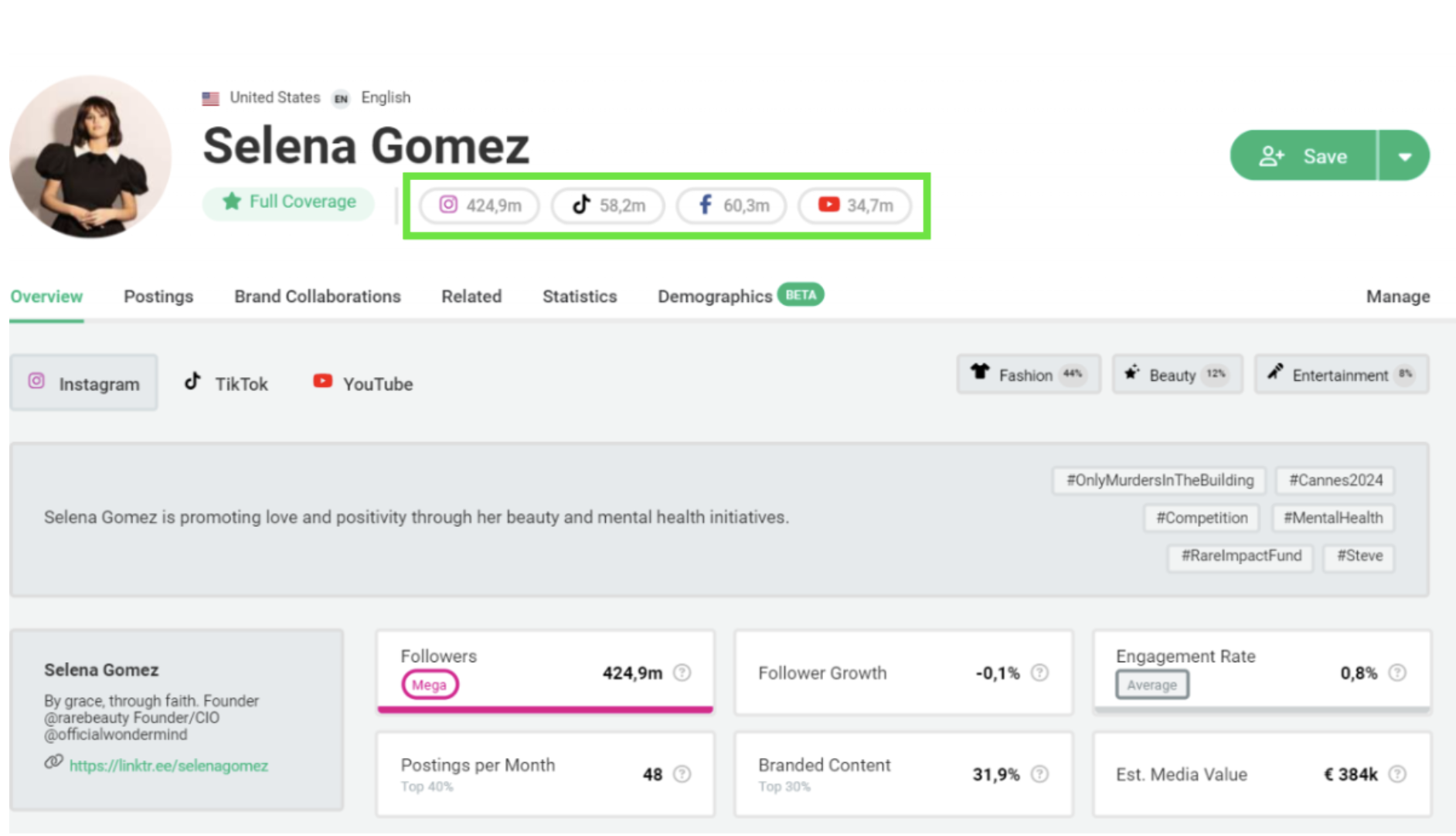
Was es ist: Die Anzahl der Follower, die ein Influencer auf einer Plattform wie Instagram, TikTok oder YouTube hat.
Warum es wichtig ist: Die Anzahl der Follower gibt dir einen schnellen Überblick über die potenzielle Reichweite und die Größe der Audience eines Influencers. Sie hilft dir, Influencer in Kategorien wie Nano-, Mikro-, Makro- und Mega-Influencer einzuteilen, die jeweils unterschiedliche Vorteile und Kosten bieten.
Große Konten mit Millionen von Followern können eine Prominenz darstellen. Selena Gomez zum Beispiel hat 424 Millionen Follower auf Insta. Stars haben jedoch oft einen hohen Preis, der sechs- oder siebenstellig sein kann. Kleinere Accounts mit etwa 20.000 Followern können dagegen für Produktgeschenke oder geringere Gebühren kooperieren.
Die Anzahl der Follower hilft Marken, ihr Budget und ihre Strategie zu bestimmen und ihre Ziele mit der richtigen Größe des Influencers abzustimmen. Allerdings sind viele Follower keine Garantie dafür, dass sich die Leute auch tatsächlich mit deinen Produkten beschäftigen oder sie kaufen. Es ist klug, die Followerzahl zusammen mit anderen Kennzahlen zu betrachten, um ein vollständiges Bild zu erhalten.
2. Engagement Rate
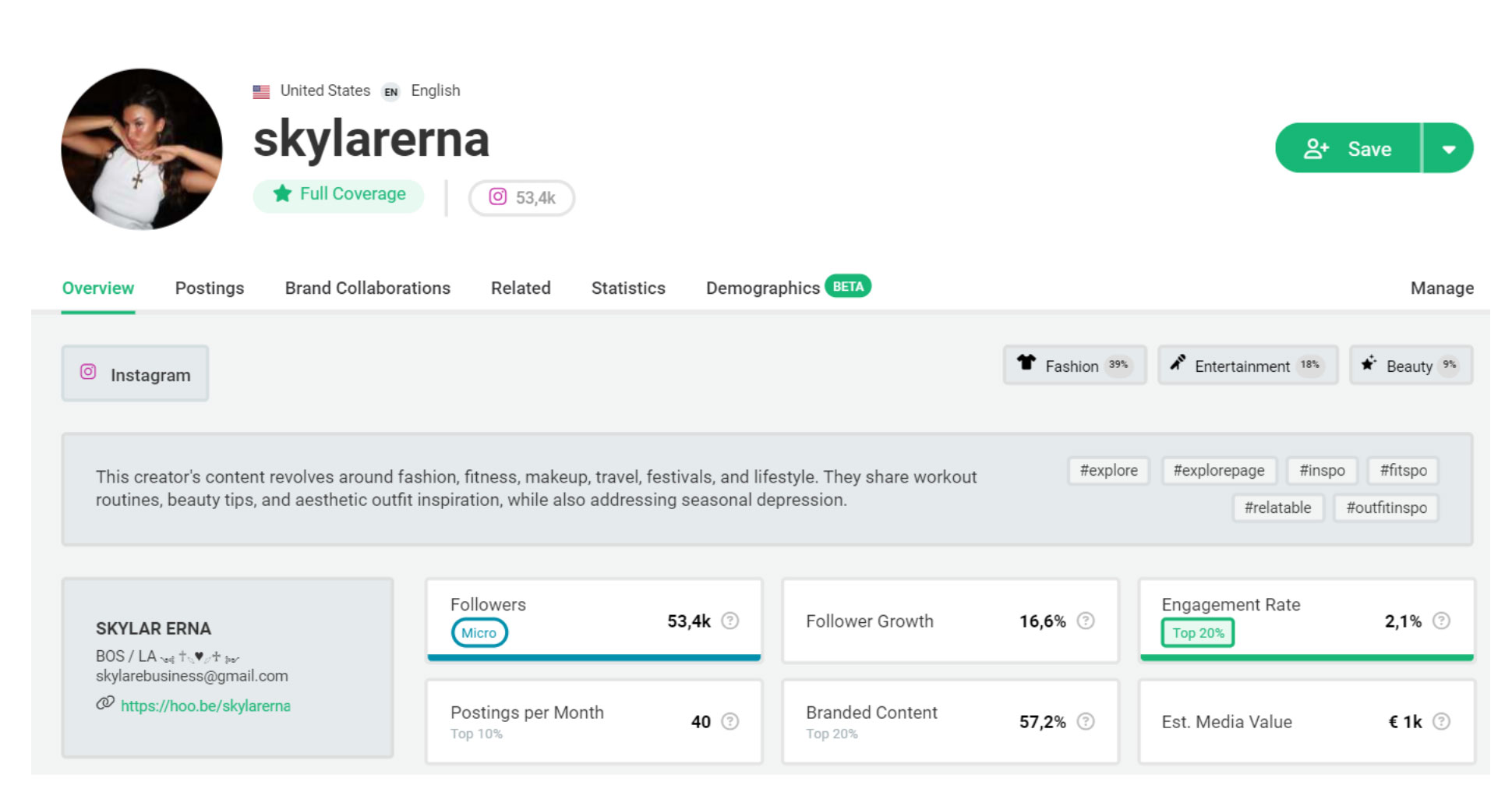
Was es ist: Wie viele Interaktion, die Inhalte eines Influencers im Verhältnis zu seiner Followerzahl erhalten. So berechnest du diese Metrik:
(Interaktionen insgesamt / Follower insgesamt) x 100
Warum es wichtig ist: Es zeigt, wie aktiv die Audience eines Influencers mit seinen Inhalten interagiert, und gibt oft Aufschluss über die Qualität der Follower und der Inhalte selbst.
Es ist normal, dass größere Accounts eine etwas niedrigere Engagement-Rate haben, aber du solltest trotzdem einen Wert von 1-2% als Basiswert anstreben. Diese US-amerikanische Beauty-Influencerin mit 53.000 Followern hat zum Beispiel eine Engagement-Rate von 2,1 % und gehört damit zu den besten 20 % ihrer Nische.
Jetzt wird’s interessant: Schau dir die Engagement-Raten für Posts mit und ohne Marken an. Anhand dieses Vergleichs kannst du erkennen, wie empfänglich die Audience für gesponserte Inhalte ist und wie viel Mühe sich der Influencer mit Markenkooperationen gibt.
Denke daran, dass eine hohe Engagement-Rate oft zu besseren Kampagnenergebnissen führt, auch wenn die Anzahl der Follower nicht sehr hoch ist. Hier geht es um Qualität statt Quantität.
3. Branded Content %
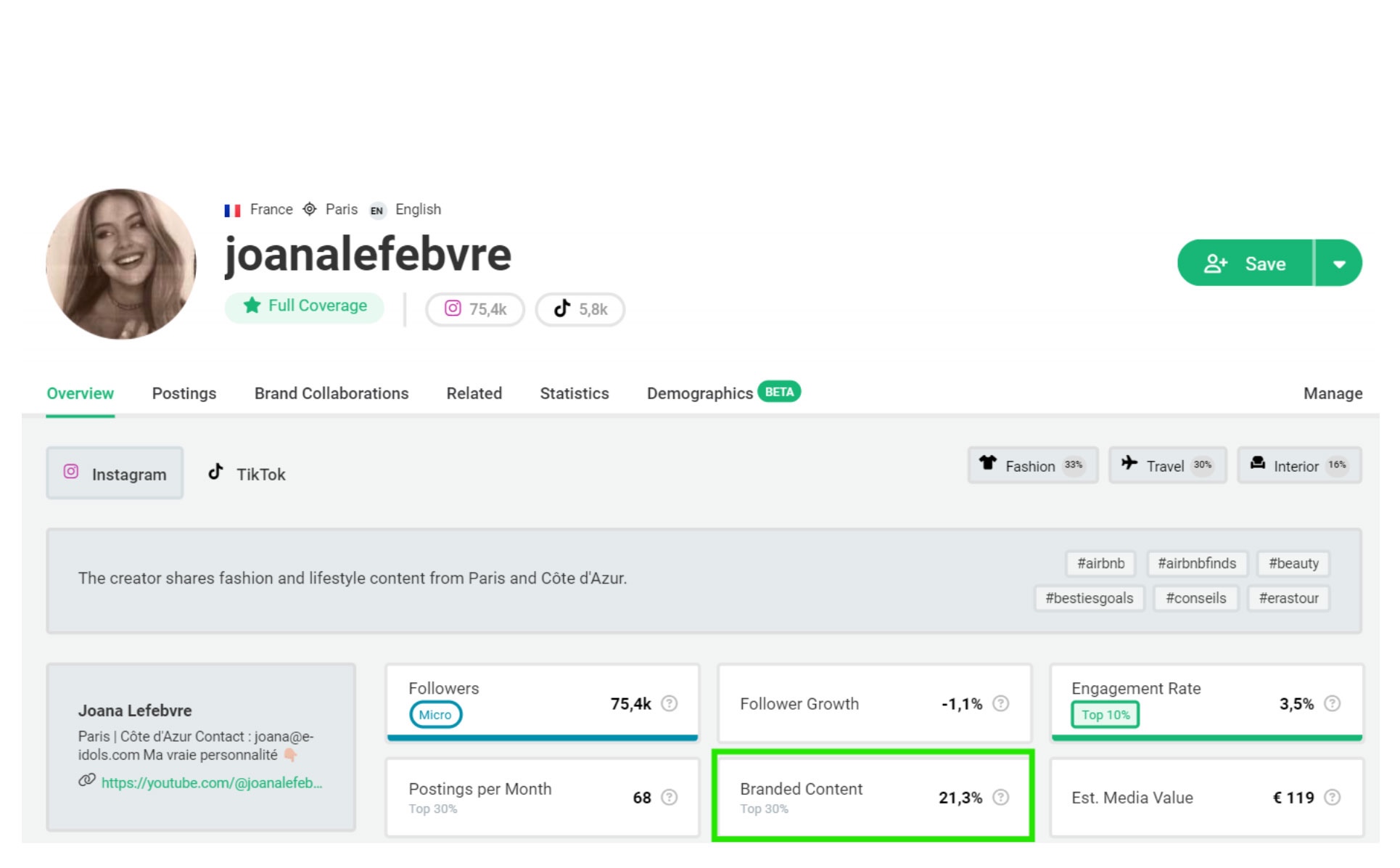
Was es ist: Der Anteil der Inhalte eines Influencers, die Kooperationen mit Marken beinhalten. So berechnest du diese Metrik:
(Anzahl der Markenbeiträge / Gesamtbeiträge) x 100
Warum es wichtig ist: Es zeigt an, wie häufig ein Influencer mit Marken zusammenarbeitet. Normalerweise möchtest du eine gewisse Markenerfahrung sehen – das zeigt, dass der Influencer weiß, wie man mit Unternehmen zusammenarbeitet und Kampagnen durchführt. Aber du willst auch nicht, dass dieser Prozentsatz zu hoch ist.
Wenn ein Konto voll mit #Werbeposts ist, könnte es übersättigt sein. Das kann dazu führen, dass die Audience für Marketingbotschaften abgestumpft ist und deine Marke nicht mehr heraussticht. Das Ziel ist es, mit Influencern zusammenzuarbeiten, die deine Markenbotschaft nahtlos in ihren authentischen Content-Mix einbauen können.
Diese französische Mode-Influencerin hat zum Beispiel einen Anteil von 21,3 % an Markeninhalten, was darauf hindeutet, dass sie zwar mit Marken zusammenarbeitet, ihr Feed aber keine Werbetafel ist.
4. Average Estimated Reach
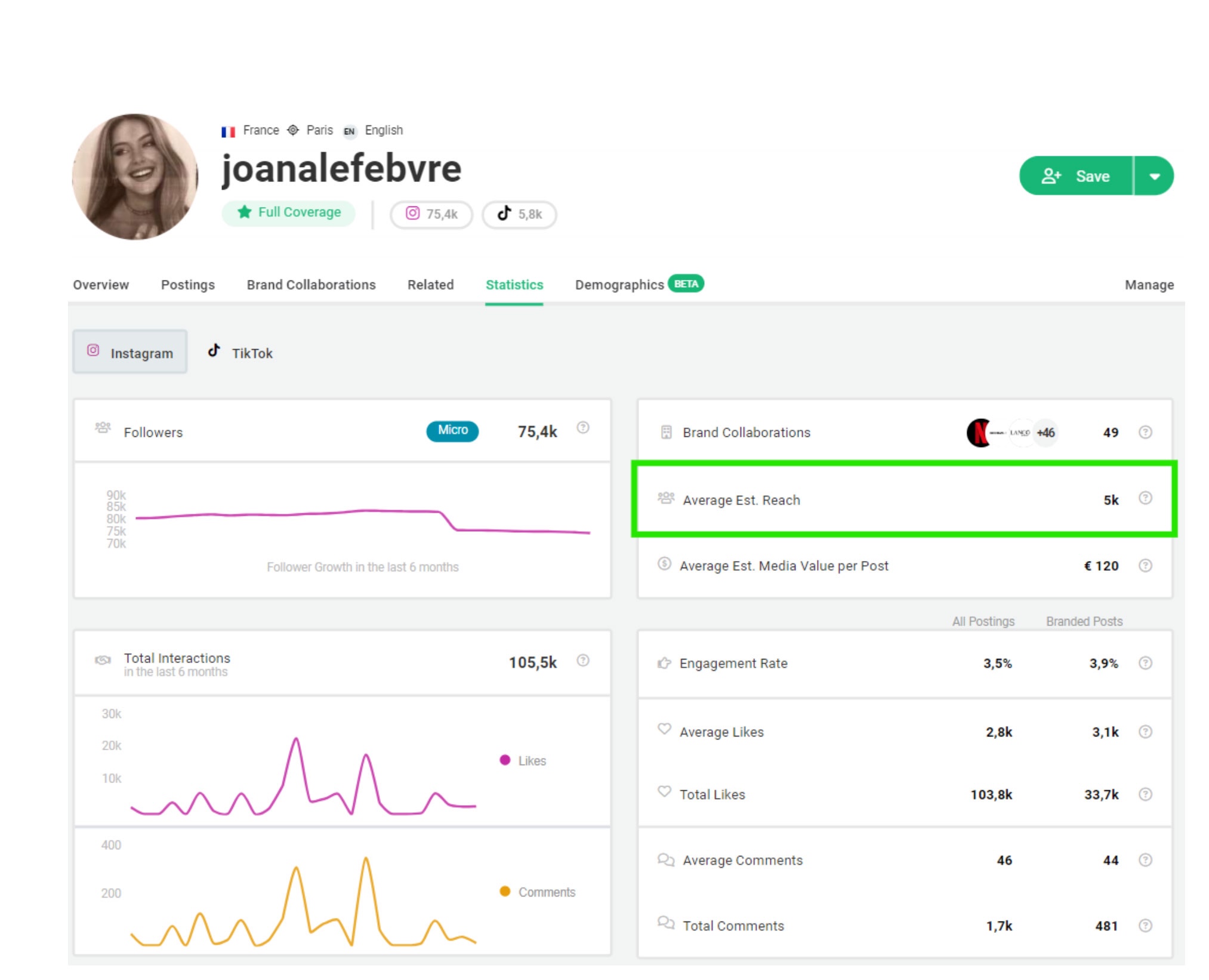
Was es ist: Die durchschnittliche Anzahl von Nutzern, die die Inhalte eines Influencers voraussichtlich sehen werden.
Warum es wichtig ist: Die durchschnittliche geschätzte Reichweite gibt dir eine realistische Vorstellung davon, wie viele Menschen du durch eine Influencer-Partnerschaft erreichen könntest.
Im Fall von Joana LeFebvre sehen wir, dass ihre durchschnittliche geschätzte Reichweite 5k beträgt. So viele Nutzer sehen ihre Beiträge im Durchschnitt.
Diese Zahl ist nützlich für die Kampagnenplanung. Sie hilft dir, realistische Erwartungen an die Sichtbarkeit deiner Kampagne zu stellen und kann dir bei der Auswahl der Influencer helfen.
5. Estimated Reach
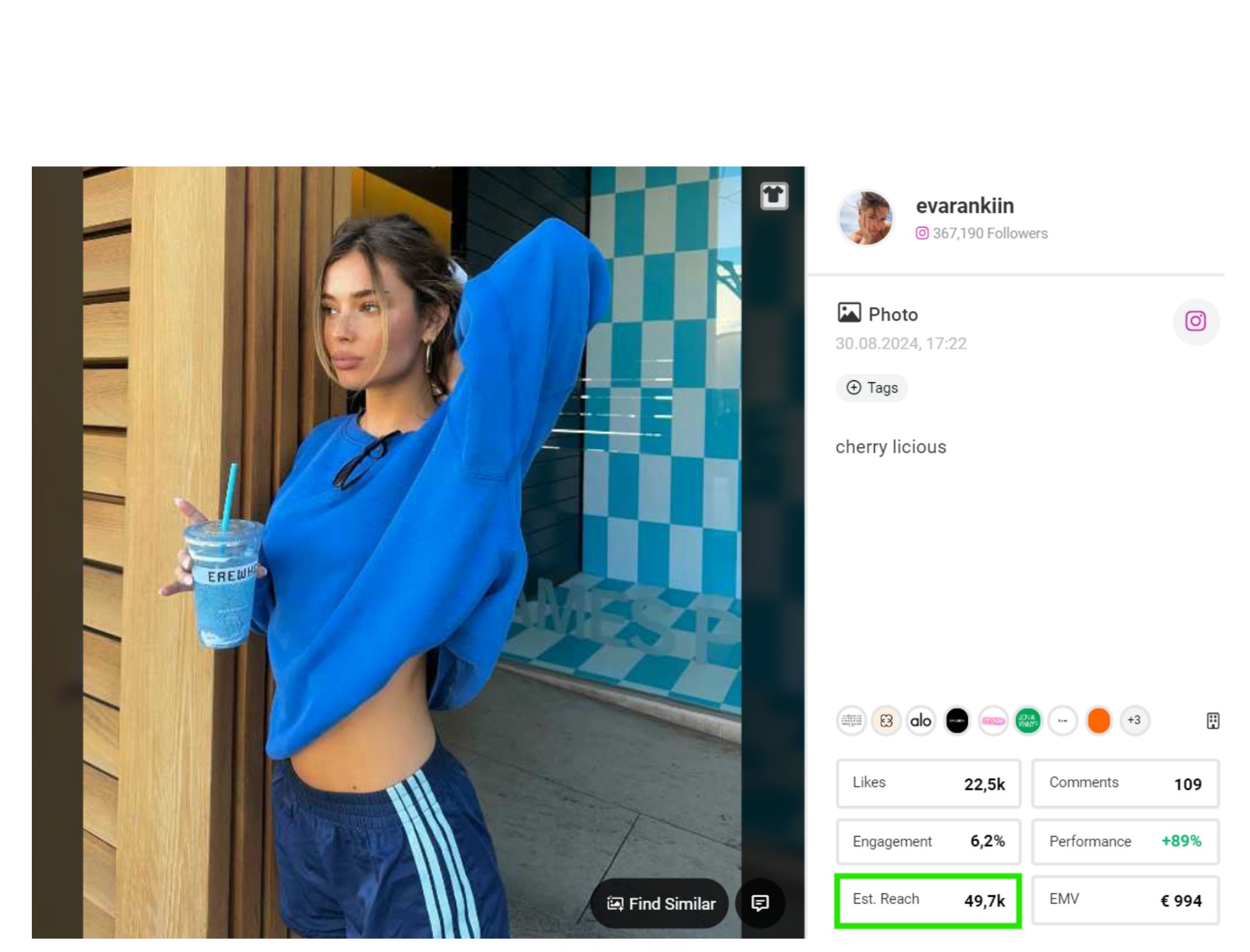
Was es ist: Die Gesamtzahl der Nutzer, die einen Post wahrscheinlich gesehen haben.
Die Summe der Aufrufe durch einzelne Nutzer
Warum es wichtig ist: Die geschätzte Reichweite gibt dir eine Vorstellung davon, wie weit sich deine Botschaft verbreitet hat.
Nehmen wir an, die britische Lifestyle-Influencerin Eva Rankiin postet diese Anzeige für deine Marke. Du kannst sehen, dass die geschätzte Reichweite 49,7k beträgt. Das ist die Anzahl der Menschen, die deine Markenbotschaft potenziell erreicht hat.
Diese Kennzahl ist sehr hilfreich, um die erste Wirkung deiner Kampagne zu messen. Sie sagt dir, wie viele Augen du potenziell auf dein Produkt oder deine Botschaft gelenkt hast. Reichweite ist nicht gleichbedeutend mit Engagement oder Konversionen, aber sie ist ein wichtiger erster Schritt. Schließlich können sich die Leute nicht mit deinem Produkt beschäftigen oder es kaufen, wenn sie es gar nicht erst gesehen haben.
6. Post Engagement Rate
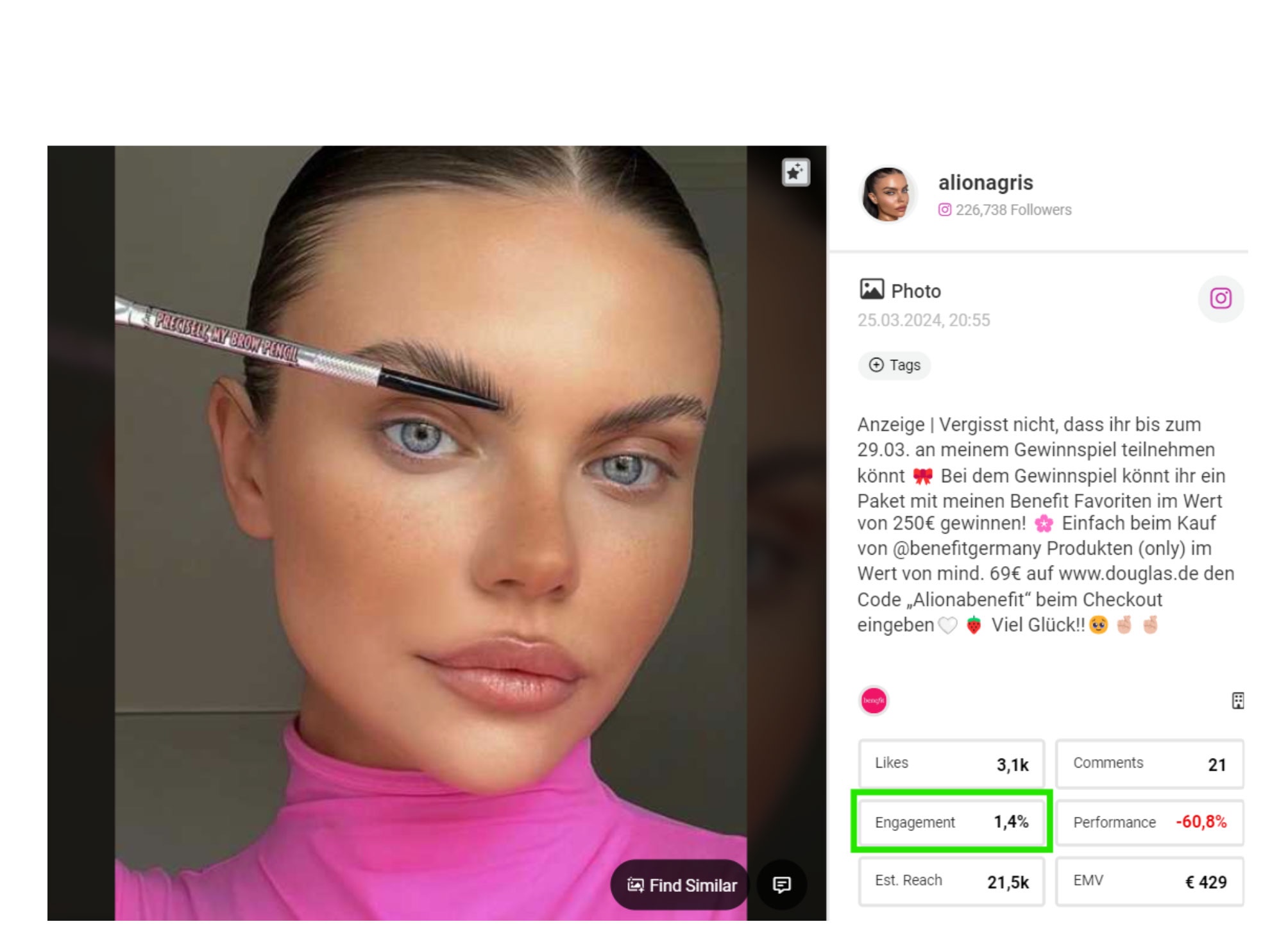
Was es ist: Der Prozentsatz der Personen, die sich mit dem Inhalt beschäftigt haben, nachdem sie ihn gesehen haben. So berechnest du sie:
(Gesamt-Engagements / Reichweite) x 100
Warum sie wichtig ist: Die Post Engagement-Rate sagt dir, wie gut deine Botschaft bei der Audience ankommt. Sie gibt an, wie interessant und relevant die Inhalte für die Audience sind, die sie sieht. Scrollen sie nur vorbei, oder bleiben sie stehen, um zu liken und zu kommentieren?
Anhand dieser Kennzahl kannst du feststellen, ob du den Inhalt richtig gemacht hast, den richtigen Influencer ausgewählt hast und ob die Audience mit deiner Marke mitfiebert. Das ist besonders praktisch, wenn du verschiedene Influencer vergleichst oder herausfinden willst, welche Art von Inhalten am besten funktioniert.
Nimm diesen Beitrag einer deutschen Beauty-Influencerin für den Beauty-Händler Douglas. Die Engagement-Rate von 1,4 % gibt dir einen schnellen Überblick darüber, wie ihre Follower auf die Anzeige reagiert haben.
7. Estimated Media Value (EMV)
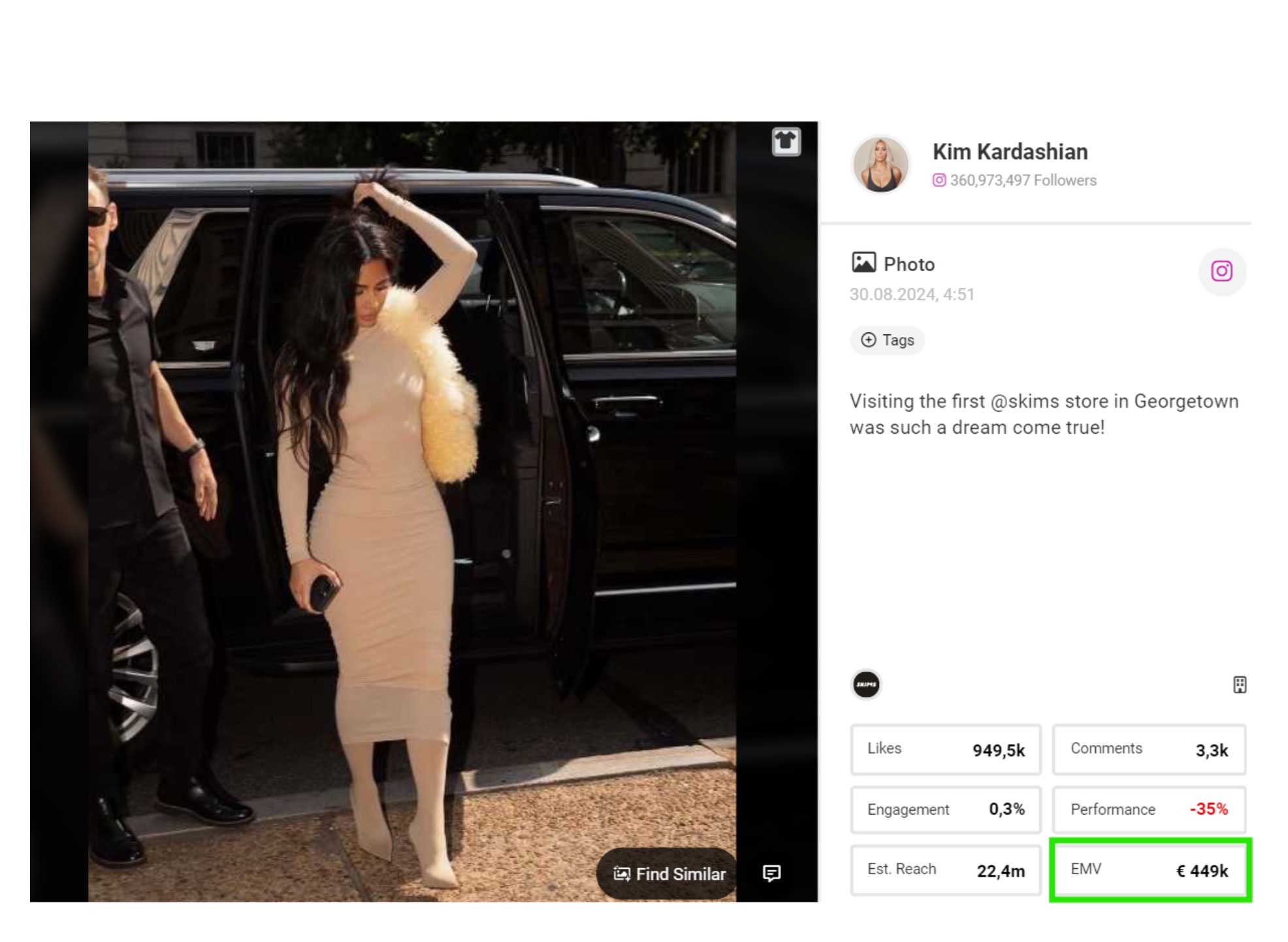
Was es ist: Der geschätzte Medienwert hilft dir zu verstehen, wie viel ein Creator und seine Inhalte in finanzieller Hinsicht wert sind. Du musst den CPM, den Reichweitenfaktor (Prozentsatz der Follower, die den Beitrag sehen) und die Anzahl der Follower kennen.
Du kannst unseren kostenlosen Rechner benutzen, um den Wert zu ermitteln, ohne selbst rechnen zu müssen.
Warum es wichtig ist: Der EMV ist ein monetärer Wert. Er bietet eine Möglichkeit, den Wert von Influencer-Inhalten ähnlich wie bei traditioneller Werbung zu bewerten.
Kim Kardashians Instagram-Post über ihren neuen SKIMS-Store in Georgetown hat zum Beispiel einen EMV von 449.000 €.
Mit dieser Kennzahl lässt sich die Wirkung von Kooperationen mit Influencern quantifizieren. Sie ist besonders nützlich, wenn es darum geht, den Return on Investment von Influencer-Kooperationen zu bewerten oder den Wert dieser Kooperationen gegenüber Stakeholdern zu präsentieren.
8. Interactions
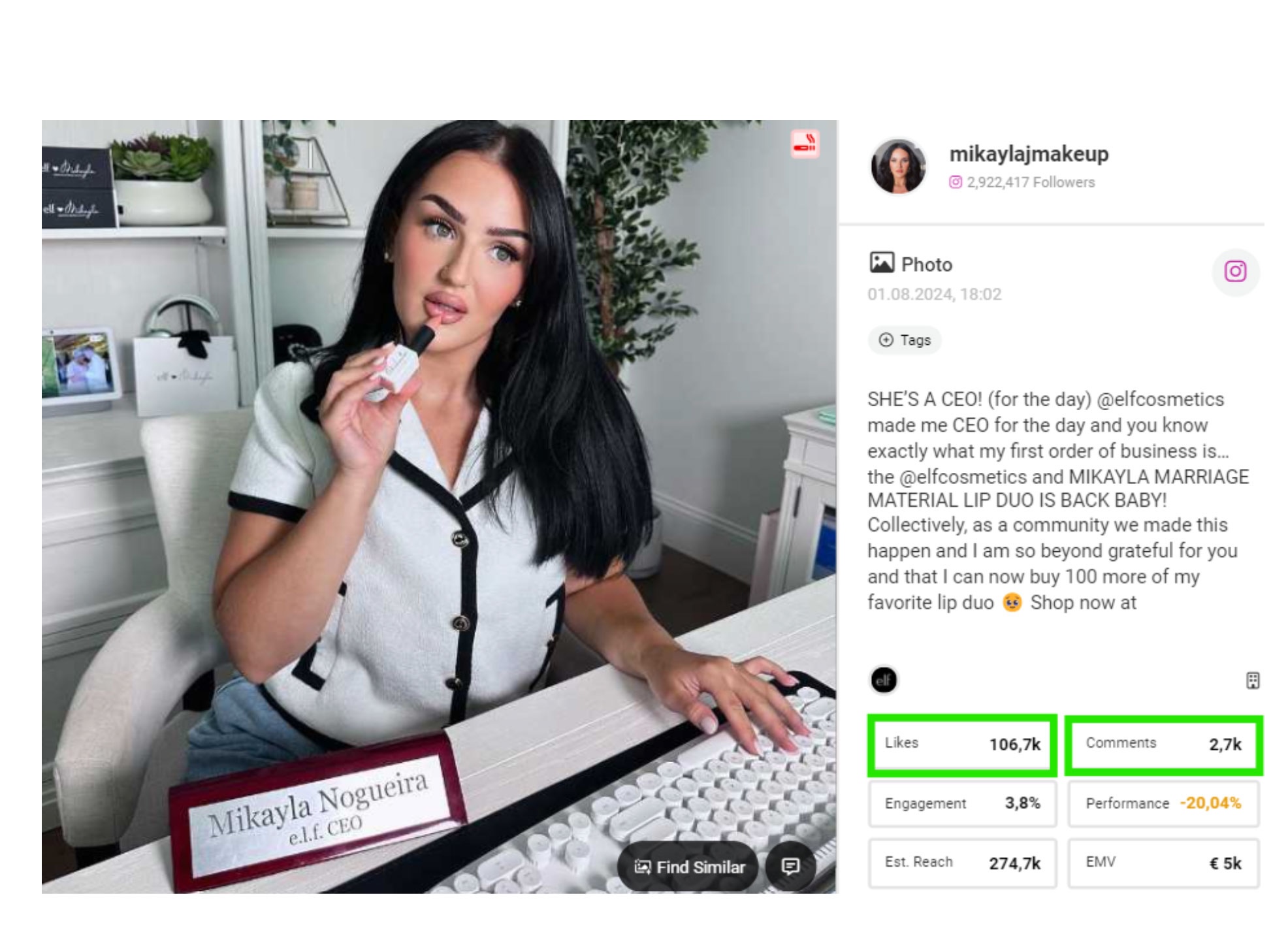
Was es ist: Interaktionen auf einen Beitrag, einschließlich Likes, Kommentare, Shares und Views.
Warum es wichtig ist: Interaktionen sind ein konkreter Maßstab für das Engagement der Audience mit Influencer-Inhalten.
In einem kürzlich veröffentlichten Beitrag erzählte die US-amerikanische Creator Mikayla Nogueira Hawken, wie e.l.f. Cosmetics sie für einen Tag zur Geschäftsführerin gemacht hatte und sie beschloss, ihr Lieblingslippenduo wieder einzuführen. Dieser Ansatz führte zu einer starken Beteiligung, darunter 106,7k Likes und 2,7k Kommentare.
Indem sie die Interaktionen verfolgen, können Marken herausfinden, welche Arten von Inhalten, Creators und Kampagnenstrategien bei ihrer Audience am besten ankommen.
9. Revenue
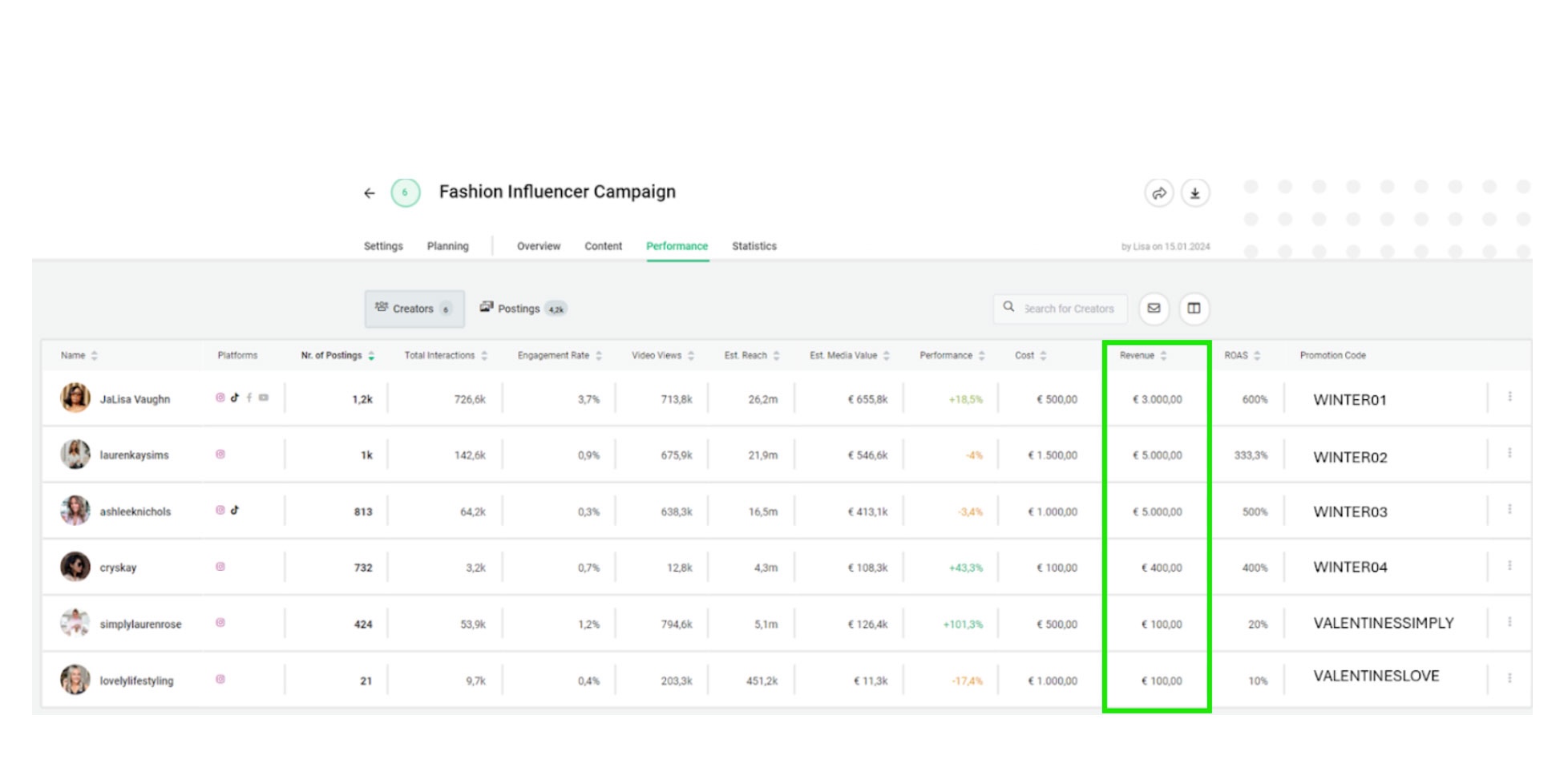
Was es ist: Die Gesamtsumme der Umsätze, die mit einer Influencer-Marketing-Kampagne erzielt wurden.
Warum es wichtig ist: Der Umsatz ist ein direkter Indikator für die finanzielle Wirkung deiner Influencer-Marketing-Kampagne. Er hilft dir, den tatsächlichen finanziellen Ertrag deiner Investition in Influencer-Partnerschaften zu verstehen.
Indem du den Umsatz verfolgst, kannst du herausfinden, welche Influencer und welche Arten von Inhalten am effektivsten den Umsatz steigern. Außerdem liefert es konkrete Beweise für den Wert von Influencer Marketing.
10. ROAS (Return on Ad Spend)
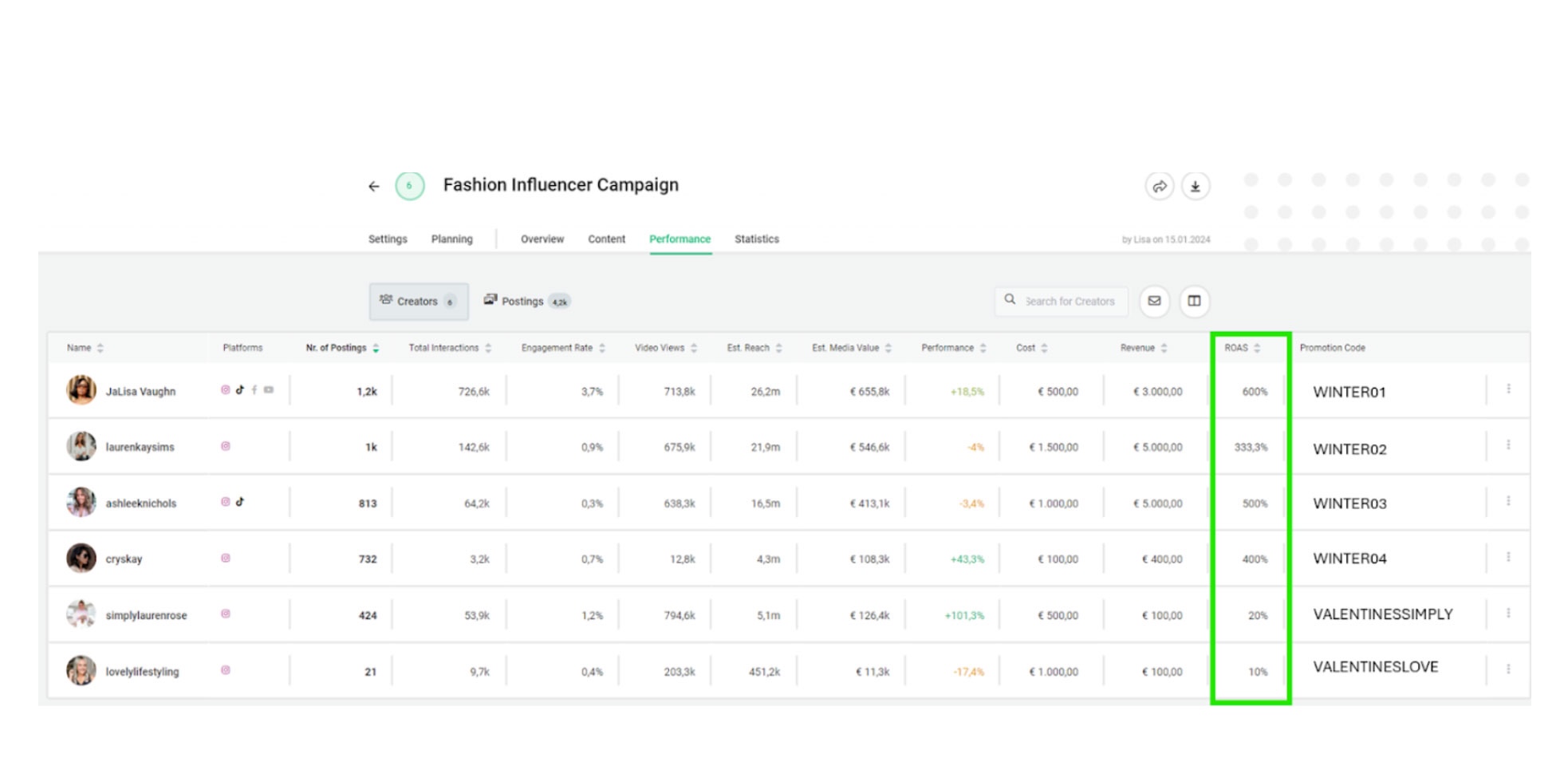
Was es ist: Die Höhe des Umsatzes, der für jeden für eine Influencer-Marketing-Kampagne ausgegebenen Dollar erzielt wird. Storyclash hat eine Shopify-Integration, die diese Kennzahl für dich berechnet. Um es selbst zu berechnen, hier ist die Formel:
(Erzielter Umsatz/Kosten der Kampagne)x100
Warum es wichtig ist: Der ROAS hilft dir, den ROI deiner Kampagnen zu berechnen, indem du deine Ausgaben direkt mit den erzielten Einnahmen vergleichst. Das ist eine wichtige Kennzahl, um die Rentabilität deines Influencer-Marketingprogramms zu beurteilen.
Der ROAS ermöglicht es dir auch, die Leistung von Influencer Marketing mit anderen Marketingkanälen zu vergleichen und so deinen gesamten Marketingmix zu optimieren.
Indem du dich auf die ROAS konzentrierst, kannst du sicherstellen, dass deine Initiativen im Influencer Marketing nicht nur das Engagement fördern, sondern auch einen aktiven Beitrag zu deinem Gewinn leisten.
Verfolge all diese Influencer Marketing Metriken und mehr
Möchtest du diese KPIs schnell und einfach automatisch verfolgen?
Storyclash liefert dir die Erkenntnisse, die du brauchst, um deine Influencer-Marketing-Strategie zu messen und zu optimieren. Mit unserer Plattform kannst du alles überwachen (auch schwer zu verfolgende Inhalte wie Instagram Stories!)
Möchtest du Storyclash in Aktion sehen? Mach eine kurze Tour oder buche eine Demo.
Influencer outreach tools can save you a lot of time and effort when it comes to contacting influencers. We’ve all been there—searching endlessly for the right creators and then hunting down their email addresses or sliding into their DMs. However, specialized solutions offer a more systematic approach.
Keep reading to learn about the best influencer outreach tools and how they can help you get better results with your overall influencer marketing strategy.
What is an influencer outreach tool?
An influencer outreach tool is specialized software that makes it easier to contact and communicate with influencers. No more endless searching for creators’ email addresses and contacting them one by one. Sounds good, right?
It’s important to distinguish between influencer marketing platforms and influencer outreach tools.
Influencer marketing platforms encompass an array of features to help brands drive and scale their influencer marketing. With most influencer platforms, you can:
- Tap into an influencer database
- Search through creator profiles using specific filters, like demographics
- Analyze influencer campaign results
- Keep track of influencer data
An all-in-one influencer marketing platform, like Storyclash, includes influencer discovery and outreach. So you can search for influencers and contact them in one place. However, bear in mind that not all influencer marketing platforms have an outreach feature.
Influencer outreach is a key feature that you should prioritize when putting together your influencer marketing toolkit, because it can save you a lot of time when contacting influencers.
Do you need an influencer outreach tool?
The short answer is, it depends.
An influencer outreach tool is very useful if you’re a larger brand, running numerous influencer campaigns, possibly in different markets. The more influencer partnerships you are managing, the more essential a comprehensive outreach tool becomes.
If you are a small brand working with a small number of regular influencers and rarely reaching out to new ones, you probably don’t need a dedicated influencer outreach tool.
It also depends on your future goals, though.
If you are aiming to run scalable, data-driven influencer campaigns, an outreach tool is super important. It not only saves time but also helps you keep track of your outreach efforts. So you know when to follow up, avoid accidentally contacting the same creator twice, and can collect insights on what kind of approach works best.
How does an influencer outreach tool work?
Let’s say you’re a fitness brand based in Germany. You want to partner with creators who live a healthy lifestyle and promote positive body image among their audience. Your target audience is mostly made up of females aged 25-35, so you choose to focus on this demographic.
So, you open up the Storyclash app. In the “Discover Creators” tab, you can search using keywords, filters, and more. You’ll also see AI-powered recommendations. So, you enter your requirements, and hit “Apply.”
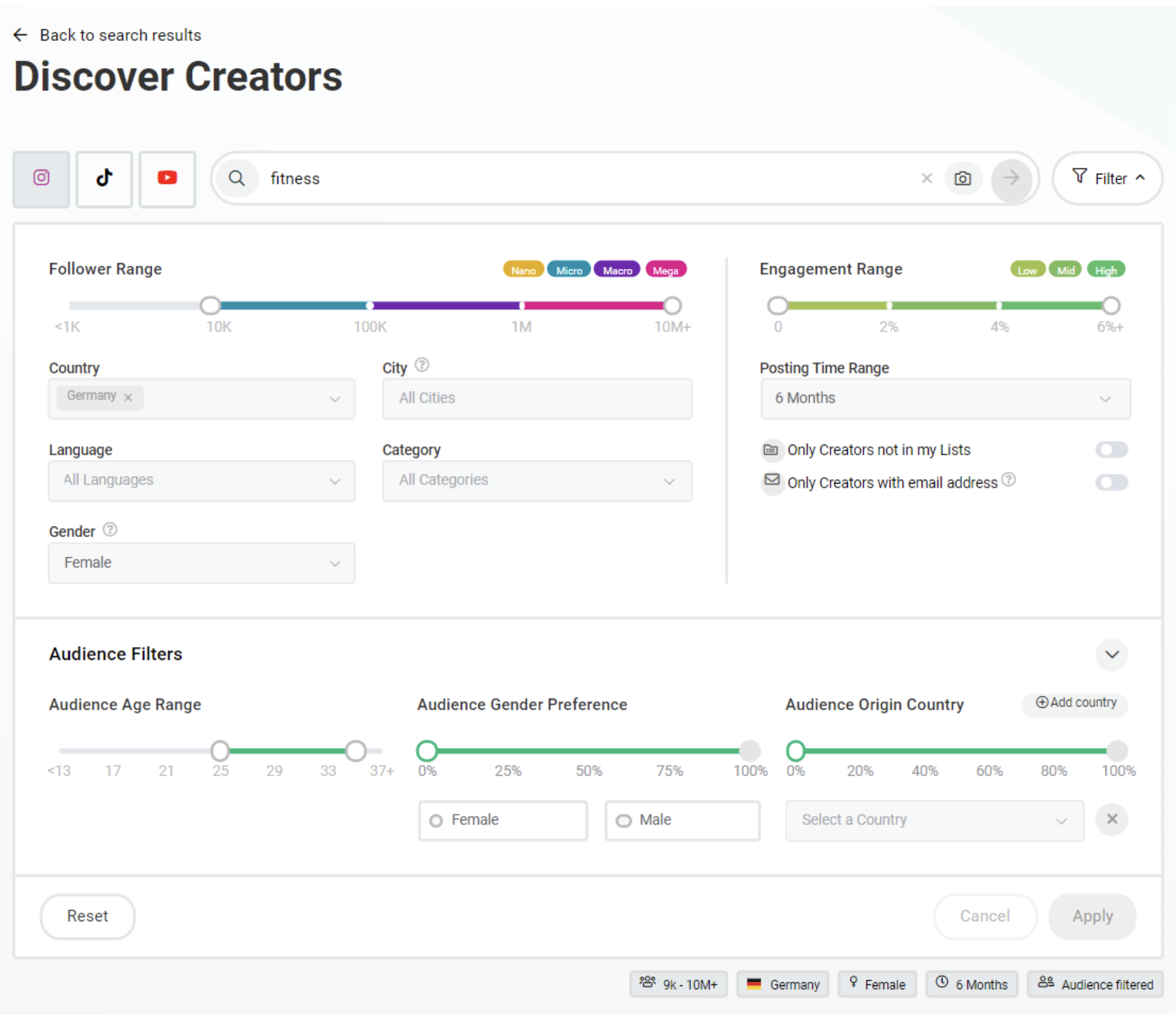
You’ll find a list of suitable creators, along with KPIs and their relevance scores. Like this:
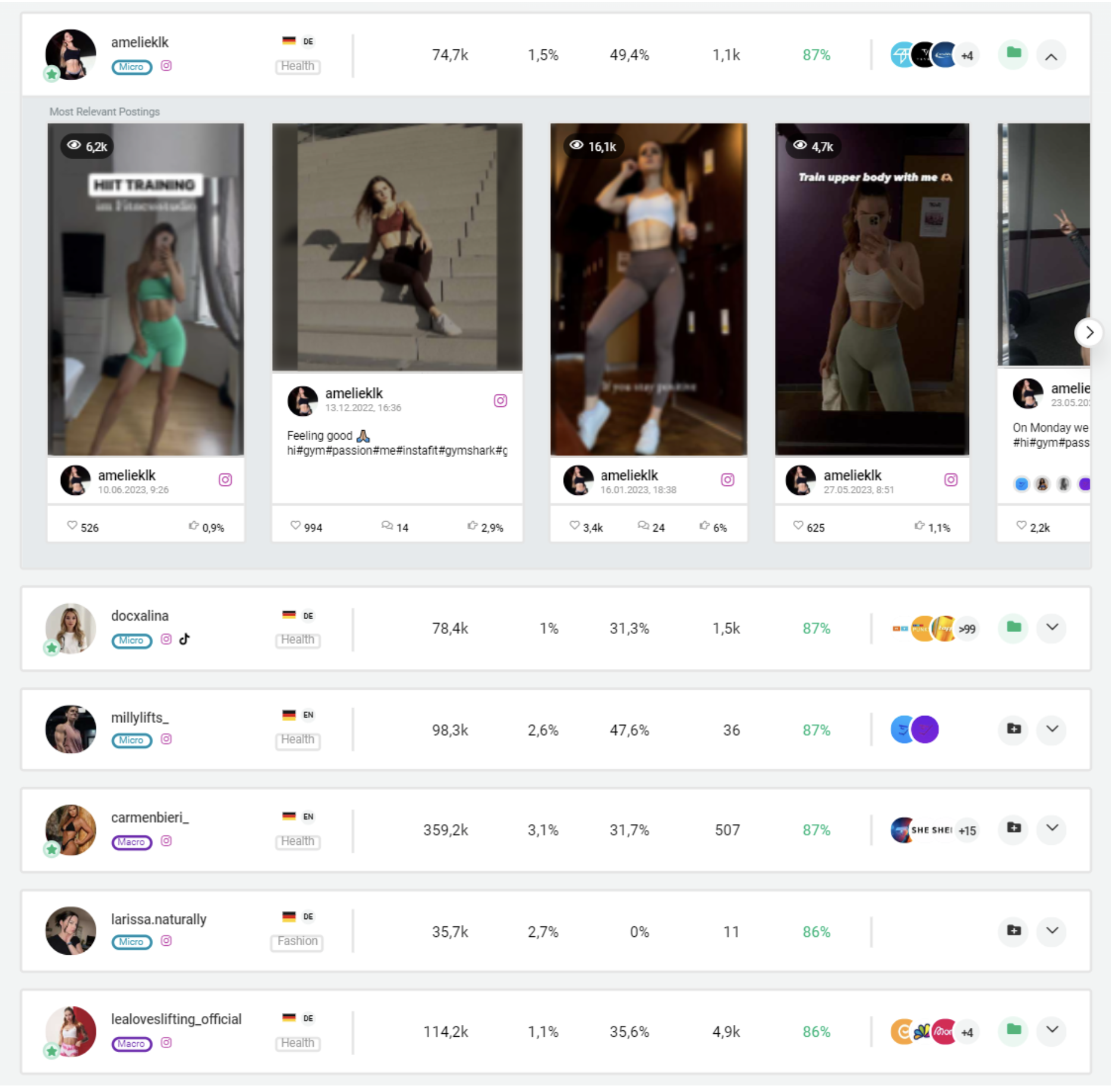
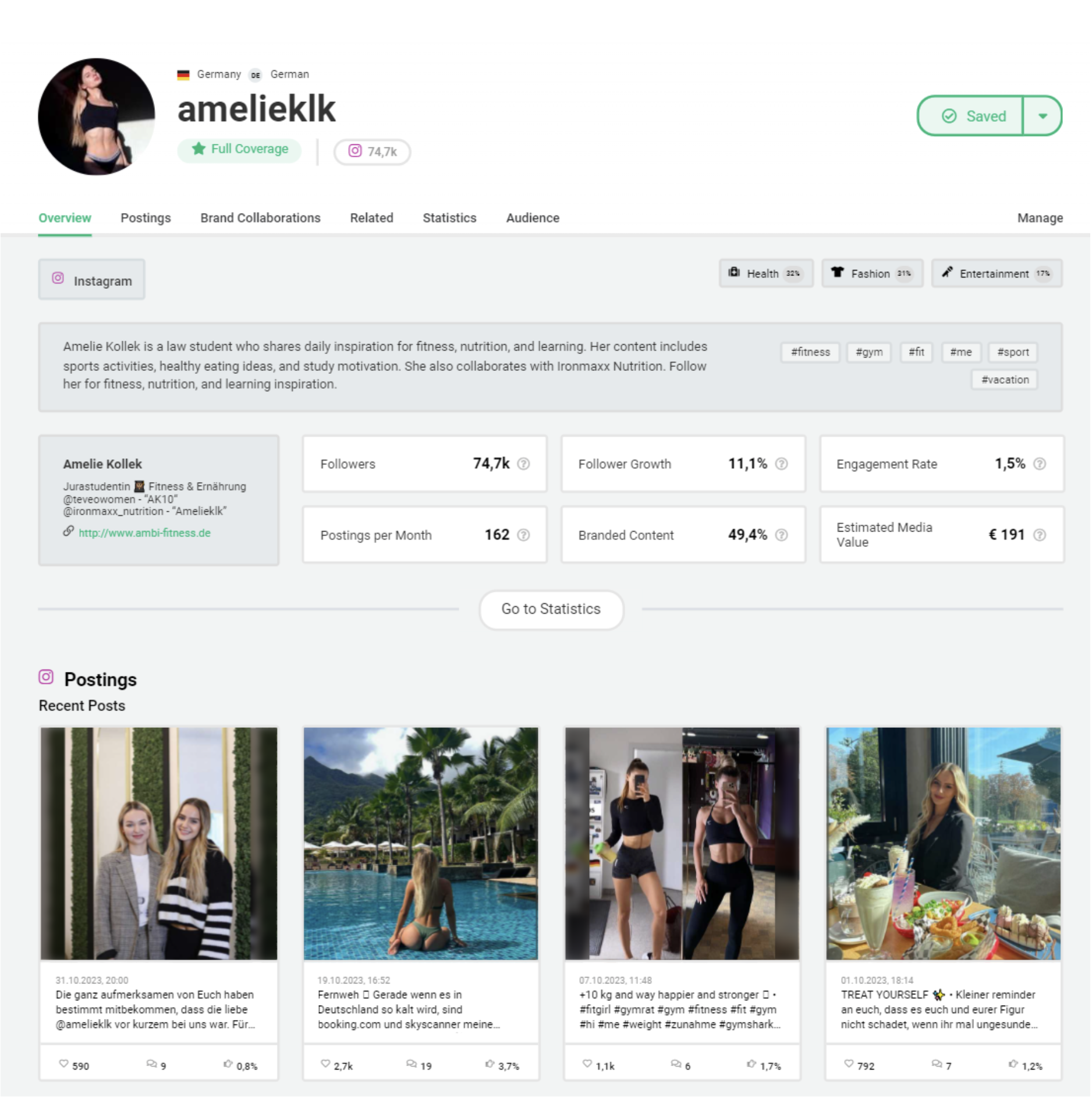
Let’s say you’re interested in @amelieklk. So, you check out her profile and previous posts:
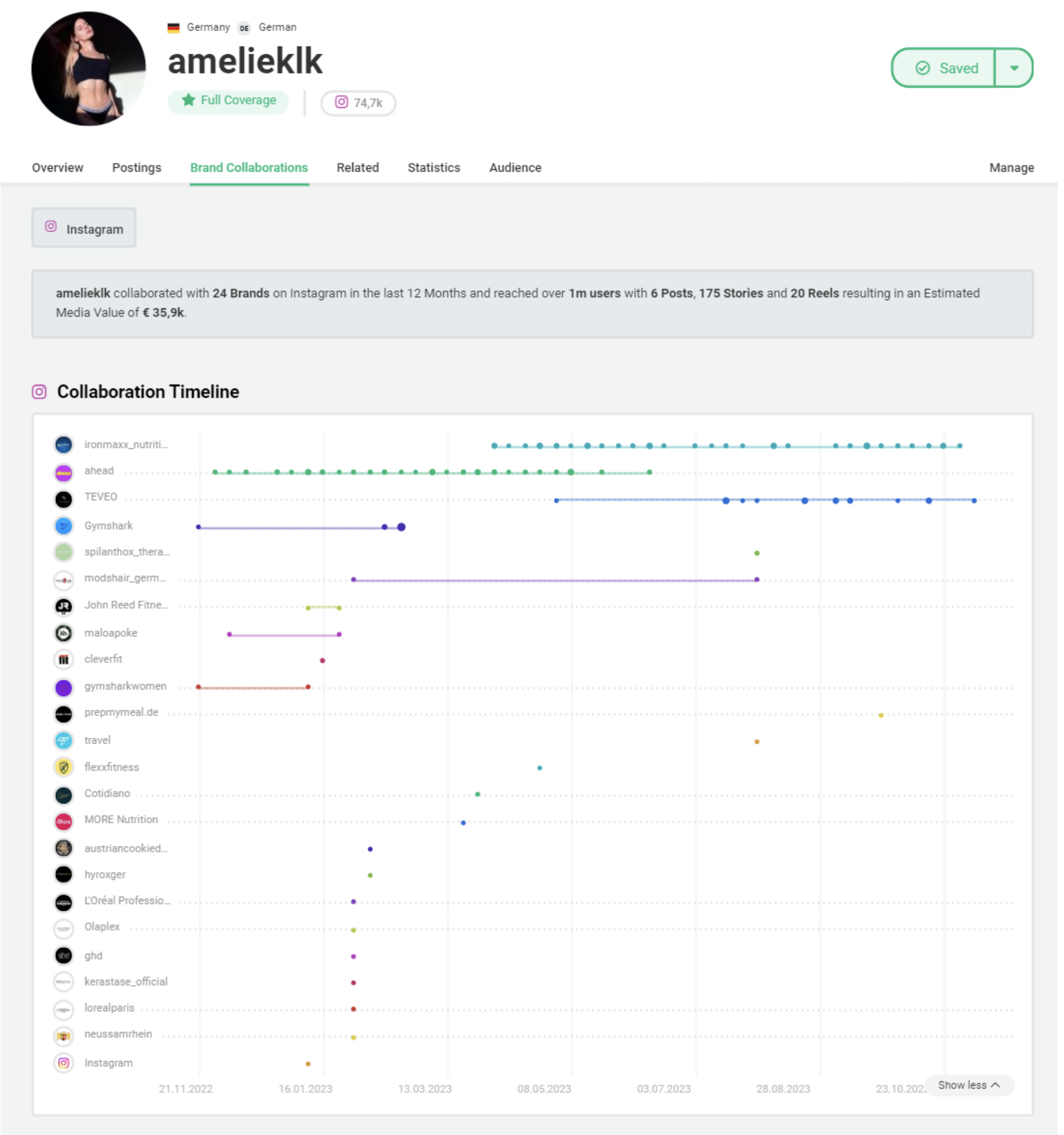
You do a quick check of her previous collabs, to see if she is affiliated with competitors. You notice she has worked with major fitness brands like GymShark and John Harris, as well as beauty brands like L’oreal, Olaplex, Kerastase and GHD:
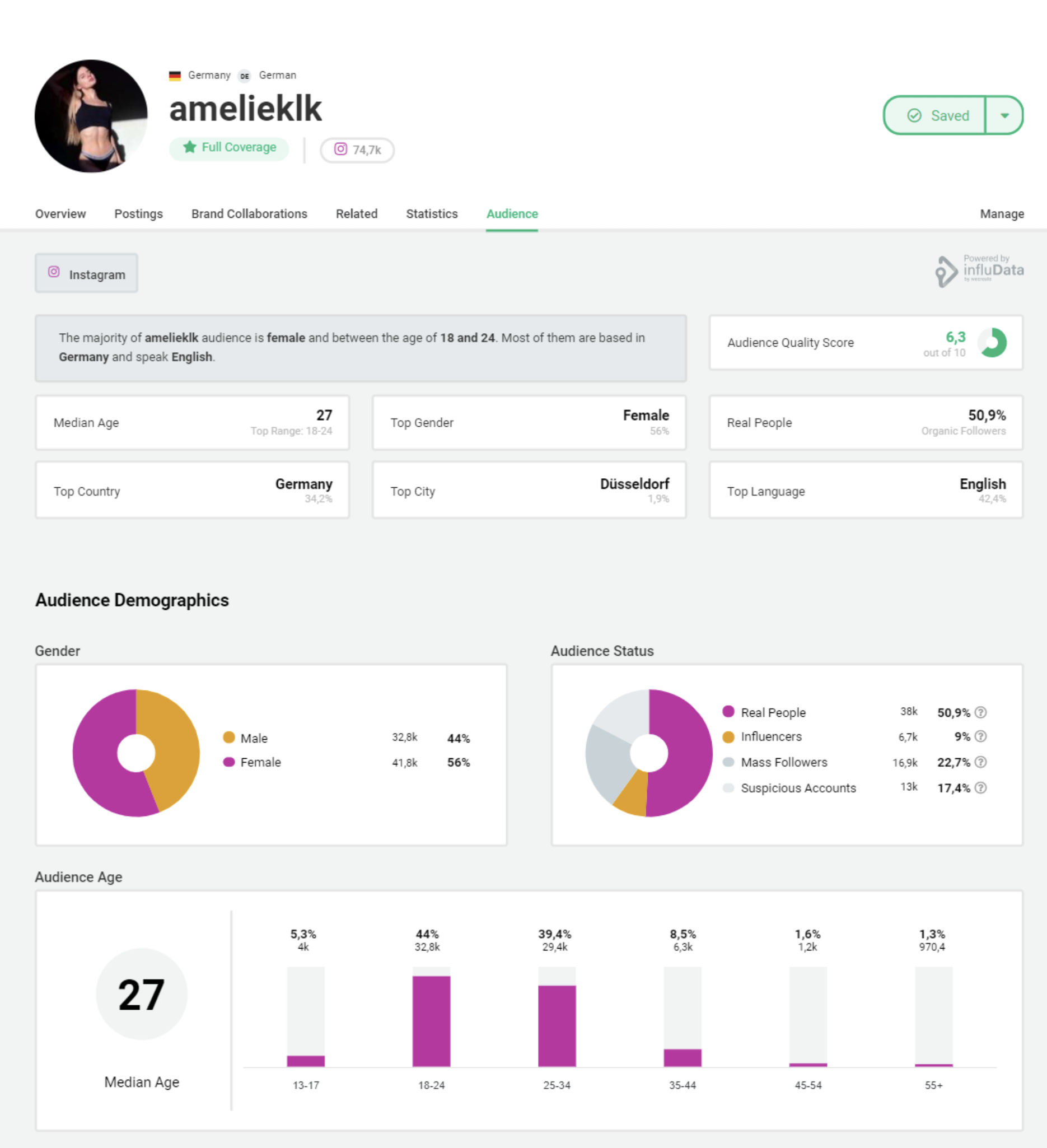
Finally, you decide to get some audience insights to see who you would reach if you worked with her. Storyclash shows you key details, like the average age, gender, language and audience quality.
You decide you’d like to collaborate with Amelie. The next step is to reach out.
Scroll to the top, click the message icon, and select “Contact creator.” Then a window will pop up where you can enter and send your message:
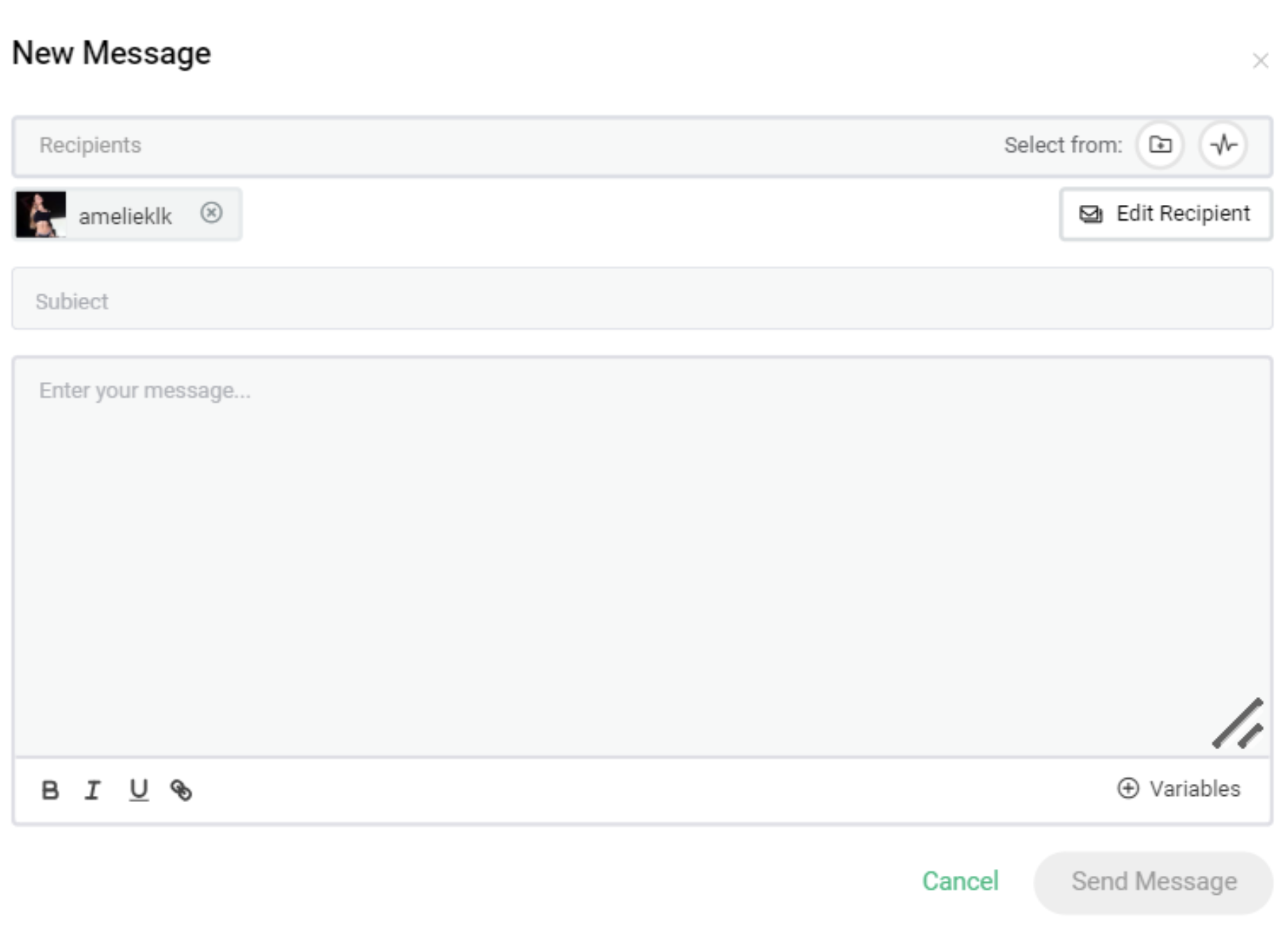
In a hurry? Like in most advanced outreach tools, you benefit from time-saving automation features, like mass outreach, templates, and personalization.
To contact several creators at once, just add the creators to a list and click “+ Variables” then “Creator name” to address them all by their first name. To save even more time, you can set up your own custom templates, like this:
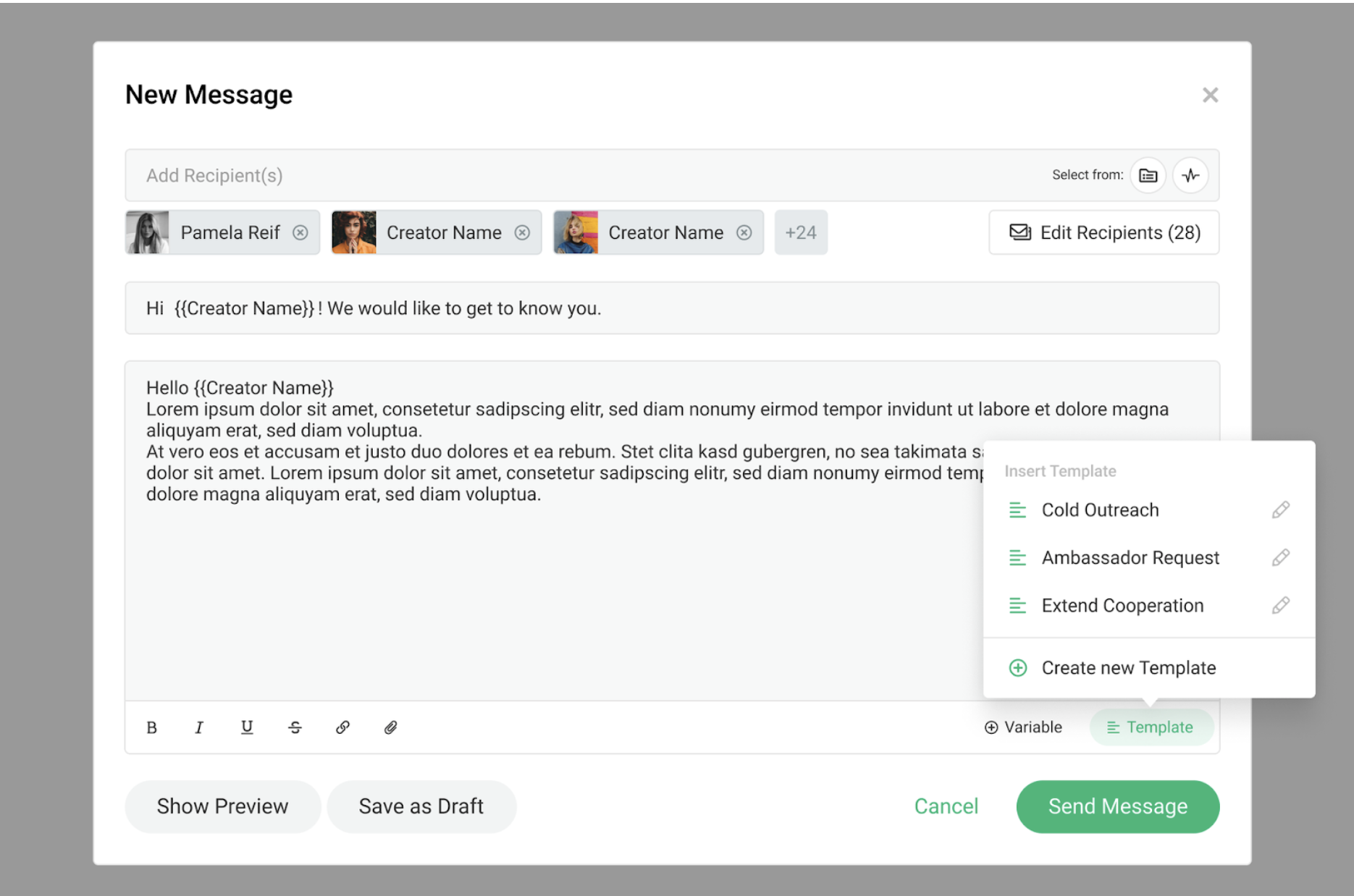
Check out our free influencer outreach templates to get some inspiration.
You can also set up an email signature to seem more professional.
Another advantage of Storyclash is that the outreach is combined with a complete Influencer CRM. That means you can check real-time social media and performance data for any influencer. And all communication (like briefings, contracts, files, etc.) are in one place so your whole team can easily find them.
Of course, every influencer outreach tool is a bit different, but that should give you an idea of how it works.
10 Best Influencer Outreach Tools
Now, let’s dive into the best tools. Here is our list of the top 10 influencer outreach tools:
1.Storyclash
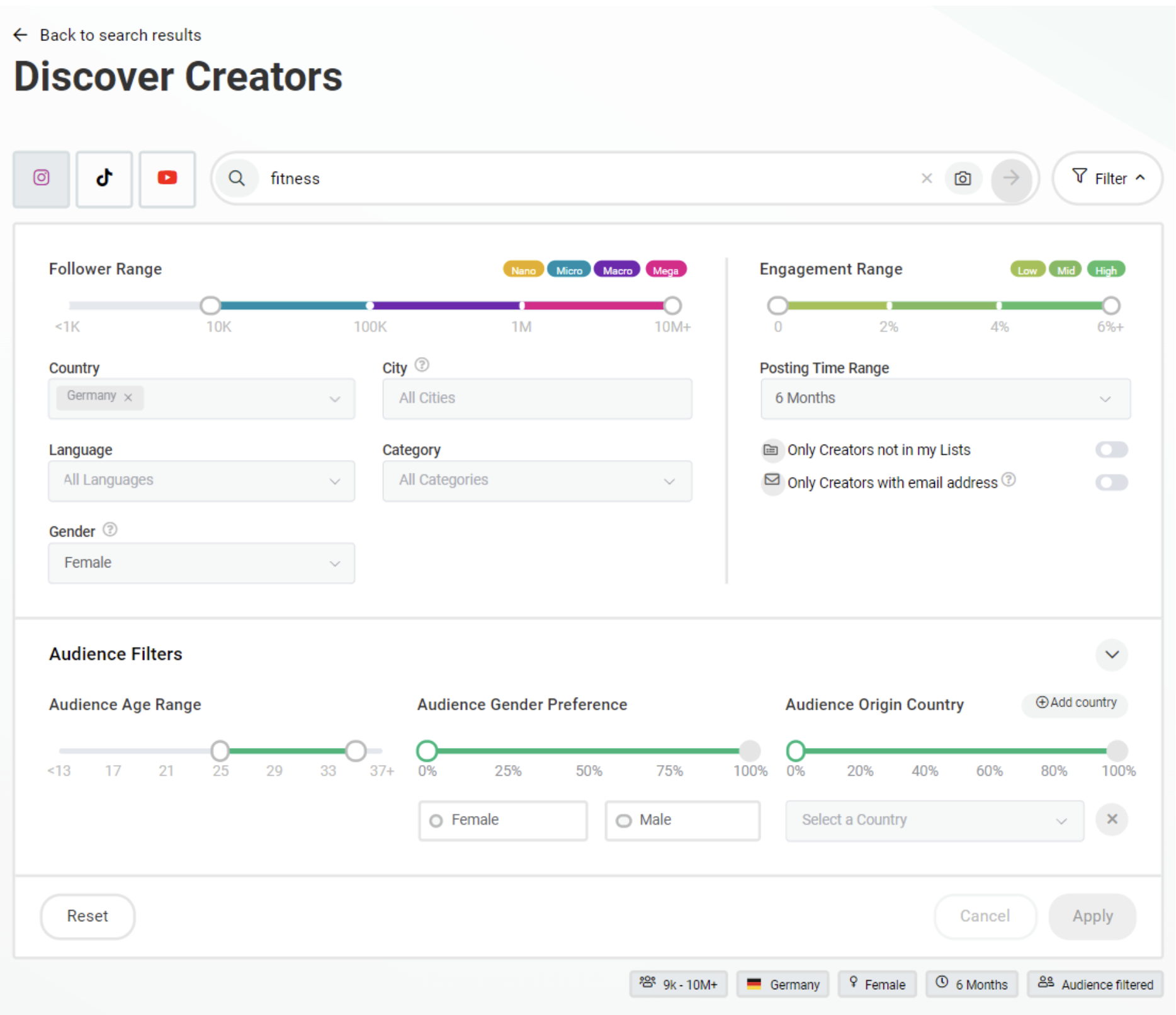
Storyclash makes it easy to find, vet and message influencers in just a few clicks. That’s why it’s the influencer marketing platform of choice for fast-growing DTCs like Bears With Benefits, Junglück or Kapten & Son, as well as large, established companies like Vodafone, Mercedes, and Kaufland.
Storyclash transforms the way brands connect with influencers, harnessing the power of AI to help brands find the perfect collaborators.
Storyclash’s advanced influencer search is not limited to basic demographics; instead, it dives deep into the content created by influencers, ensuring a seamless and relevant match for your brand. Whether you’re a car manufacturer or a skincare brand, Storyclash can quickly find influencers who are a perfect fit.
Storyclash stands out for a few reasons:
- Unparalleled insight into previous collaborations, so you can see who else influencers have worked with
- Access Instagram stories after 24 hours, so you can check influencers’ content fits your brand
- Direct messaging functionality, with the option to add your own templates, so you can reach out within seconds
2. Ninja Outreach
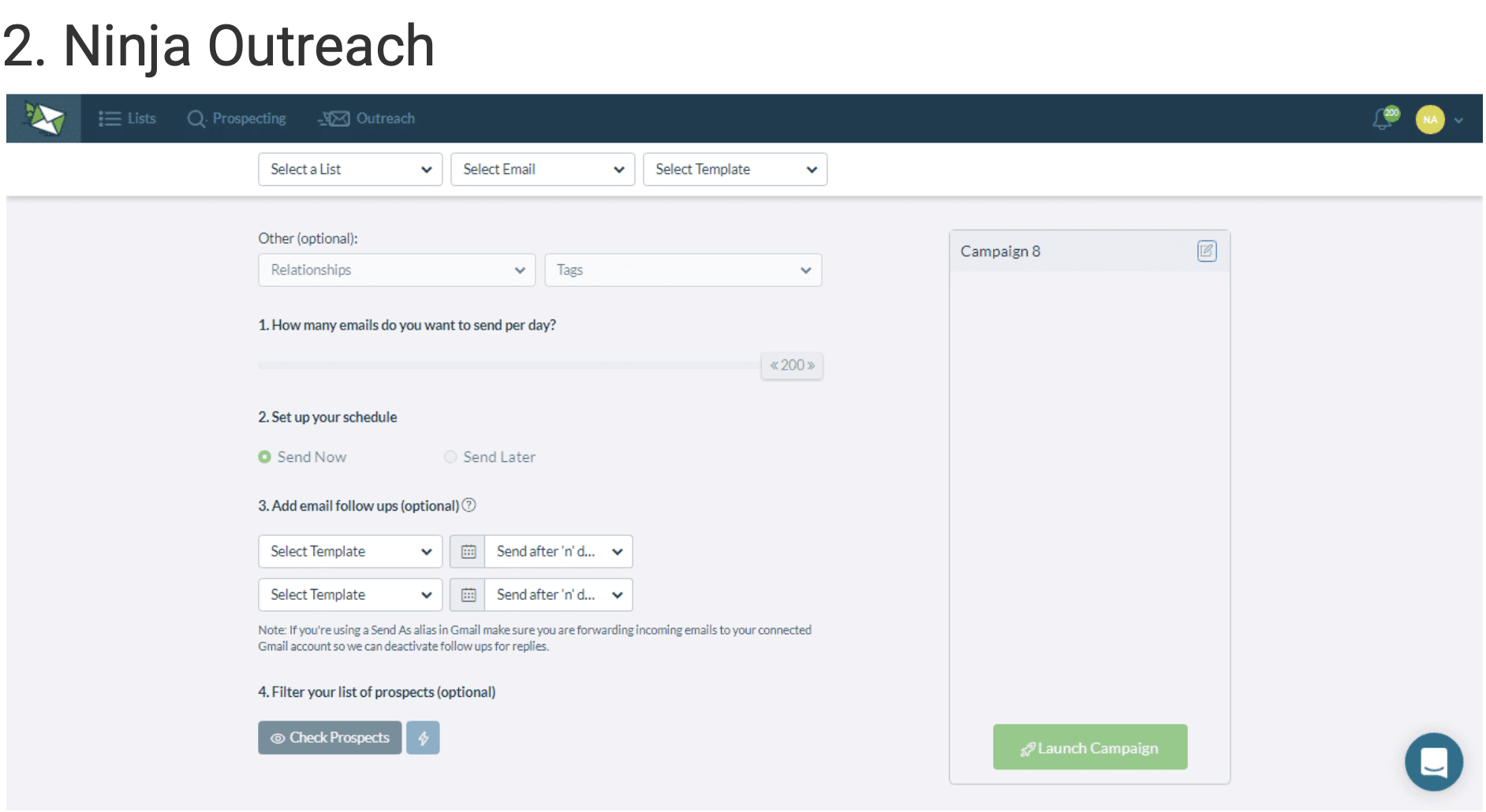
Ninja Outreach streamlines the process of finding and connecting with relevant bloggers and social media influencers.
This tool enables you to pinpoint influencers through keyword searches, refining your results further with tags such as bloggers, influencers, and companies. It has a database of influencers from platforms like Twitter and Instagram and includes contact details where available.
The tool allows you to integrate your existing contacts, offering flexible organization options. Additionally, its Chrome extension makes it easy to add new contacts while web browsing.
Ninja Outreach offers some automation options. Once you have your email templates set up, the tool can automatically initiate contact with influencers and manage follow-up sequences.
3. Overloop
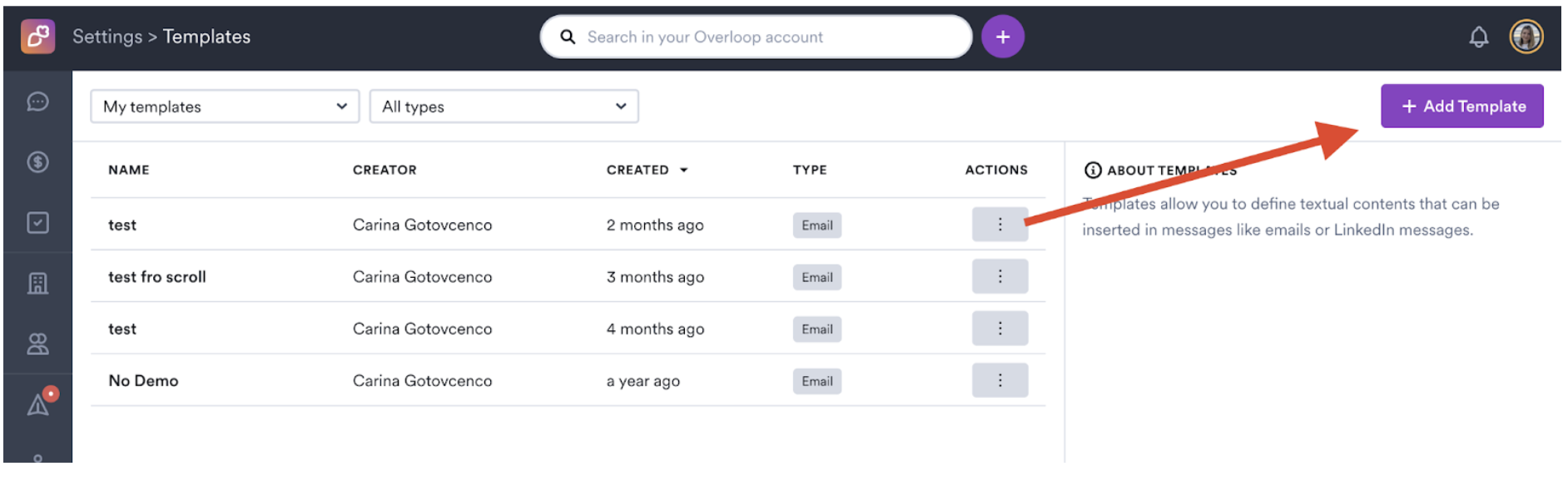
Overloop (formerly Prospect.io) is primarily a sales tool. It excels in locating contact information and facilitating outreach.
Once you’ve identified a potential influencer, Prospect.io can be utilized to uncover their contact details. Simply visit their LinkedIn profile or website, and the tool will assist in gathering available contact information.
Moreover, you can seamlessly add these influencers to an email list within Prospect.io. This feature streamlines the process of sending outreach emails, especially when reaching out to several influencers, enhancing efficiency and effectiveness.
4. Hunter.io
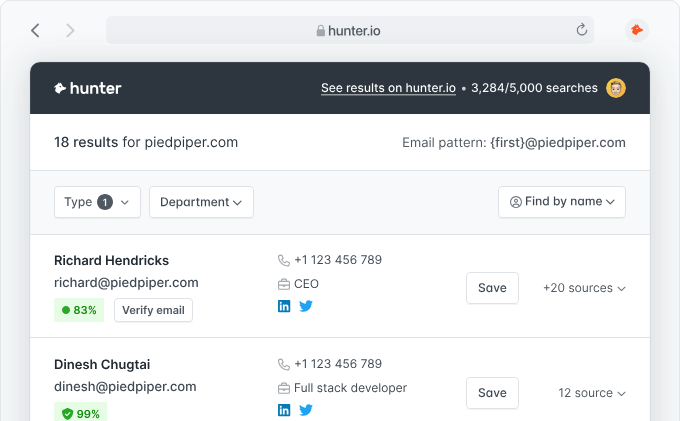
Hunter.io is a go-to tool for finding and checking professional email addresses. It’s got a huge list, with over 100 million email addresses from people at all sorts of companies, organizations, and schools.
You can use its search filters to dig up specific emails, whether you’re looking for someone’s personal email or their work one. It’s a favorite for brands trying to track down email addresses for leads, big-name bloggers, and authors. Plus, Hunter.io makes it super easy to grab all that contact info and save it for later.
On top of finding emails, Hunter.io has this cool Campaign tool that lets you blast out emails to a bunch of people, keep tabs on your conversations, and see who’s actually reading your emails. It plays nice with other platforms too, like Pipedrive, Salesforce, Gmail, and Outlook.
Hunter.io has some free features, but if you need more, they’ve got different paid plans like Starter, Growth, Pro, and Business to fit what you’re looking for.
5. Snov.io
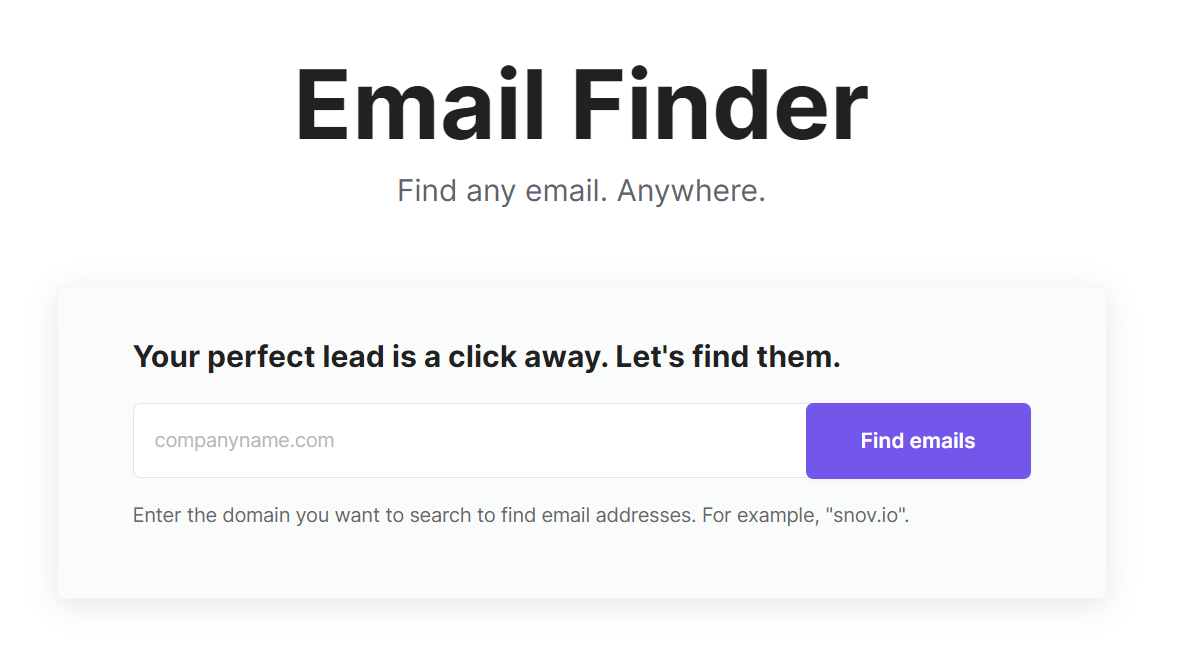
Snov.io helps you find an influencer’s contact info. It’s an email discovery and cold outreach automation tool that saves you the hassle of searching for influencers’ contact details.
Snov.io lets you easily pull email addresses from any domain. It also digs up names and job titles, though that’s more for lead generation purposes. And if you’re using LinkedIn, Snov.io can help find email addresses there too.
After snagging those emails, Snov.io isn’t just about discovery; it helps you reach out to your contacts. You can track your Gmail-sent emails to see who’s opened them and clicked on any links. Plus, it lets you set up and send out drip email campaigns, keeping your outreach efforts organized and efficient.
6. MailShake
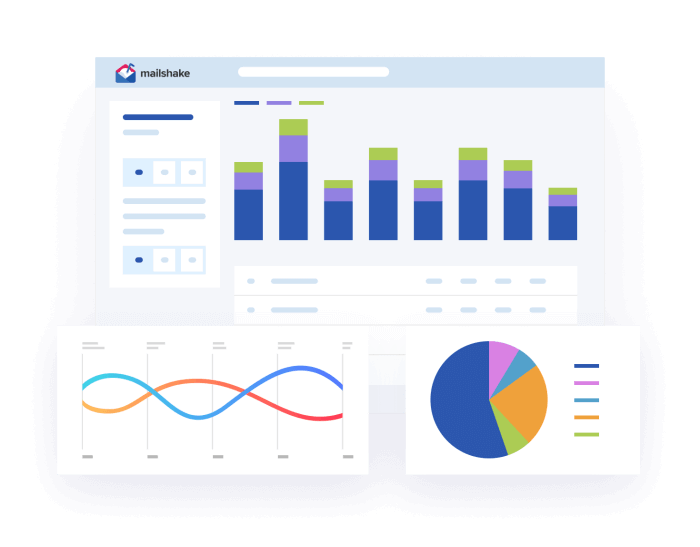
MailShake focuses on cold emails. Getting started is easy: just add your contacts and draft the emails you want to send.
If you need a hand crafting that first outreach email, MailShake offers a helping hand with its pre-written templates. Alternatively, you can answer a few questions to generate a personalized message tailored to your needs.
The platform allows you to set up campaigns complete with follow-ups triggered by specific actions, like clicking a link or reaching a certain date. Plus, whenever you add a new contact, MailShake automatically kicks off your email sequence, ensuring no one slips through the cracks.
7. QuickMail
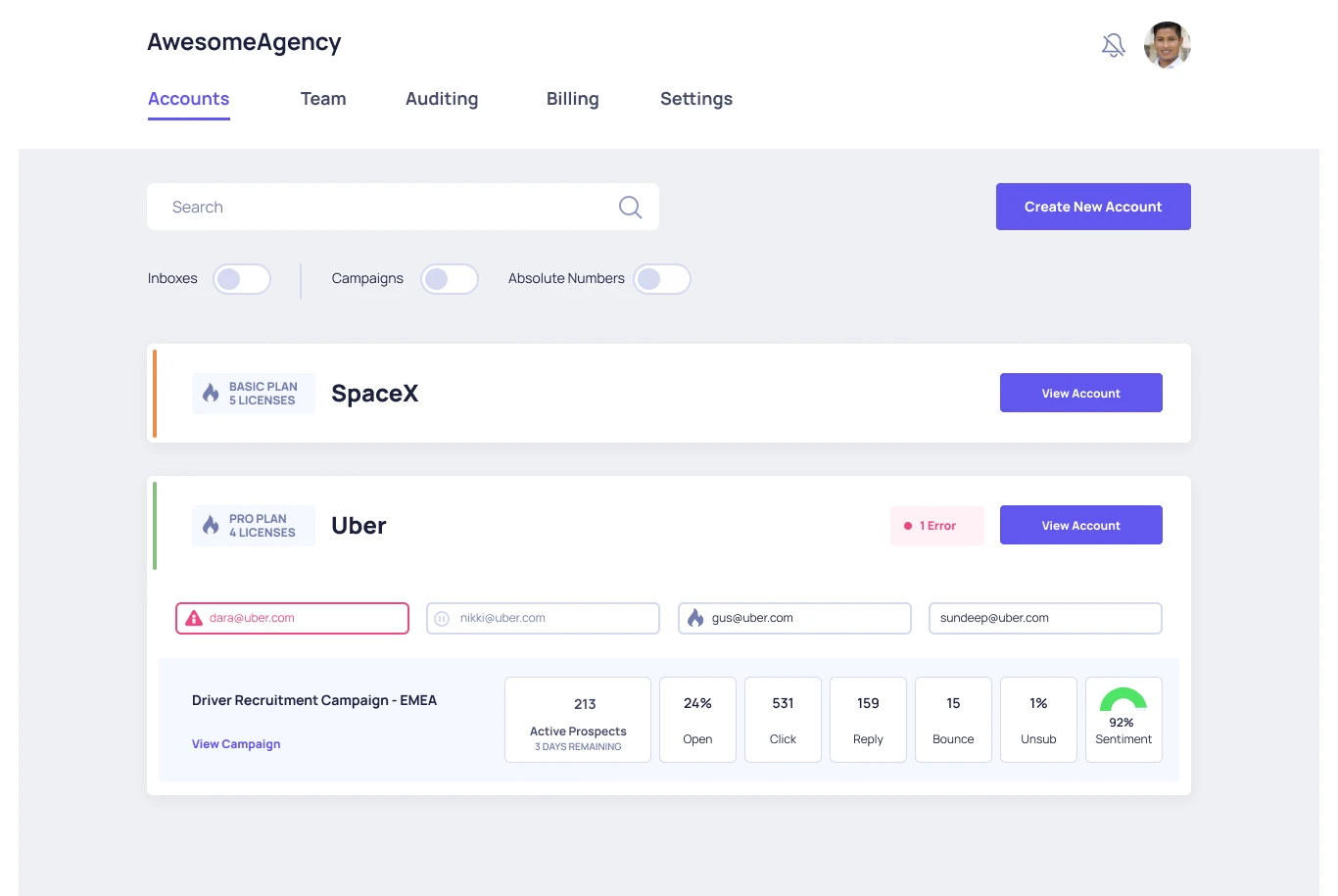
Quickmail is all about streamlining your email outreach with automation and intelligent follow-ups.
With this tool, you can set up personalized, scheduled emails that appear to come directly from your own inbox. You’re also free to arrange as many follow-up emails as needed.
One of Quickmail’s standout features is its reply detection software, which checks to ensure recipients haven’t responded to your emails, even if they’ve used a different email address. This helps to prevent any awkward missteps in your communication process.
8. Grin
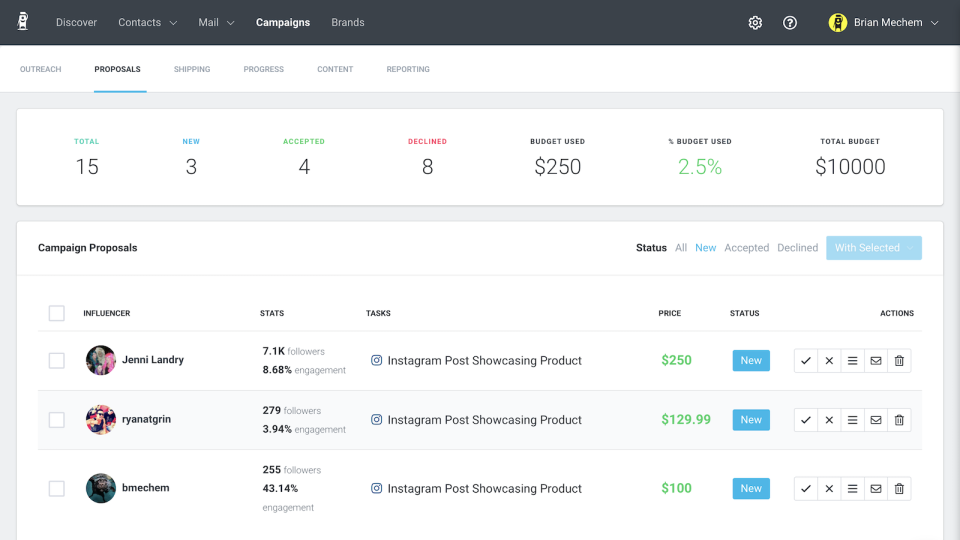
Grin positions itself as a comprehensive influencer marketing platform aimed at scaling influencer relationships, sales, and brand impact without increasing your workload. It’s trusted by brands like MVMT, CUTS, and Everlane.
However, in September 2022, Grin lost access to the Instagram API, which means brands can no longer use Grin to search for Instagram influencers or analyze influencer campaigns and content through the platform. The only data available is from creators who have explicitly given Grin permission to use their information.
Despite these changes, Grin still offers valuable tools for contacting creators, processing payments, and managing gifting campaigns. However, it’s worth noting that the platform’s capabilities for creator discovery are now somewhat limited.
For brands seeking alternatives to Grin that offer broader functionality, particularly in creator discovery, check out our article on the best alternatives to Grin.
9. Kolsquare
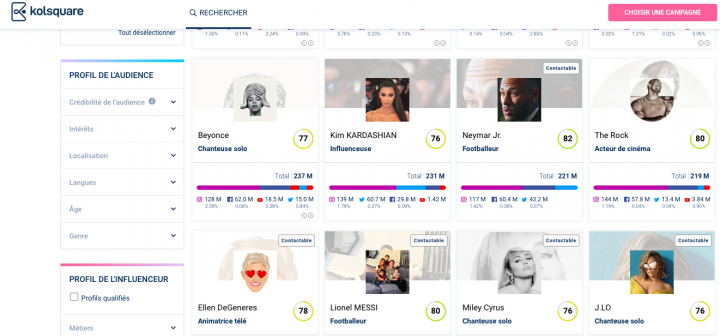
Kolsquare is a platform that champions the influence of Key Opinion Leaders (KOLs), hence the name. It’s designed to manage and monitor campaigns, track performance, and tap into a pool of 3 million creators.
One of its standout features is the audience credibility index, which helps in identifying and avoiding fake influencers. Kolsquare’s advanced search capabilities allow for precise filtering of influencers and their audiences, ensuring targeted campaign efforts.
Kolsquare offers a Gmail integration, enabling direct communication with KOLs through the platform.
However, Storyclash offers AI-powered influencer discovery, deep insights into creators and competitor brands, and comprehensive campaign tracking—all at a more affordable price than Kolsquare. Learn more about why Storyclash is a better alternative to Kolsquare.
10. Lefty
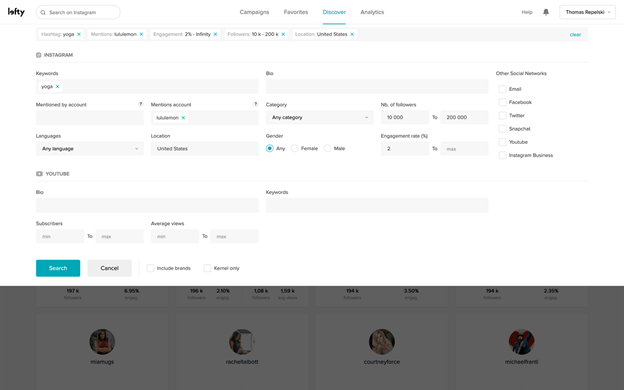
Lefty is an influencer marketing platform dedicated to helping brands identify influencers who align with their target audience.
Lefty provides insights into each influencer’s profile, including audience quality, interests, demographics, and their performance in past campaigns. Additionally, Lefty offers valuable content insights from previous campaigns and includes a useful fee estimator tool.
However, one notable limitation of Lefty is its lack of direct messaging functionality for reaching out to influencers on the platform. In comparison, Storyclash offers more sophisticated, AI-based search options and influencer outreach capabilities.
Learn more about Lefty and how the platform compares to Storyclash.
Try Storyclash, the leading influencer outreach tool
Storyclash makes it easier than ever to find and contact the perfect influencers for your brand. With Storyclash, you get an influencer marketing search and outreach in one.
Book a demo to see how easy it is to find and contact influencers, or take the tour to get a sneak peek.