Create your budget strategy with AI
Click on the assistant to turn this article into a concrete action plan and leverage Storyclash insights.

Article edited and updated in 2024, originally based on a guest article written by Natalie Frieb, author of the popular weekly newsletter called Influencer Marketing Update and expert in all things influencer marketing.
Wondering how much to pay influencers in 2024? We break down the influencer marketing costs to help you budget and get the most out of your influencer marketing campaigns.
How much should you pay an influencer?
It’s not foolproof, but there is a simple formula to calculate influencer marketing costs. It’s called CPM, or Cost Per Mille.
CPM is a standard metric based on the price per thousand impressions. Marketers use it to calculate the cost of influencer collaborations, and other advertising channels (like display advertising).
Here’s how to calculate the CPM of an influencer collab:
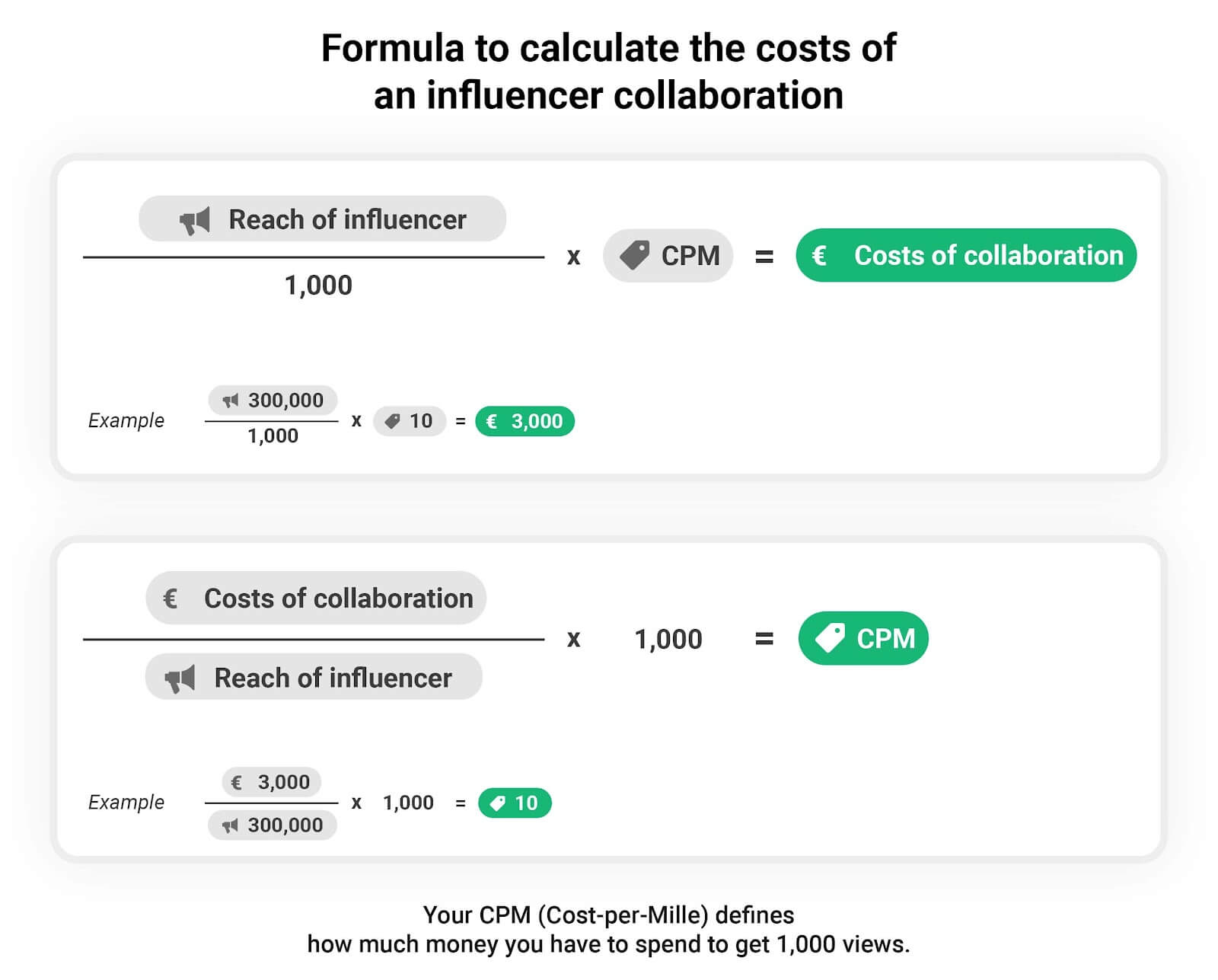
Divide the total cost of the cooperation by the influencer’s reach (in thousands). For instance, if a campaign costs €4,000 and the influencer has 300,000 followers, the CPM would be €13.33
per thousand followers.
If you already have a target CPM, like €10, you can estimate the total cost by multiplying this CPM by the influencer’s reach (divided by 1,000). For example, if your target CPM is €10 and you’re working with an influencer who has 500,000 followers, the campaign would cost €5,000.
This metric gives you an idea of how much an influencer is likely to cost. And you can use it to measure and compare the cost-effectiveness of your collaborations.
However, while CPM is a helpful benchmark, actual rates can vary depending on other factors.
Factors that impact influencer rates & influencer marketing costs
How much an influencer chooses to charge depends on several factors. Here are the main ones:
- Reach: An influencer’s number of followers significantly impacts their rate, with a larger reach typically commanding a higher fee.
- Audience quality and engagement: An engaged audience that trusts the influencer can command a higher rate, as engagement often translates directly to campaign effectiveness.
- Channel and format: An Instagram story, a YouTube video, and a TikTok reel are all different types of content and cost different amounts.
- Influencer popularity and fame: Influencers in high demand or those famous beyond social media (like Key Opinion Leaders) often have higher rates due to their broad appeal and influence.
- Content creation: The effort and quality of content creation can increase costs, especially for elaborate and high-quality productions.
- Industry: Influencers who are particularly influential in specific industries or niches may charge more due to their specialized audience and expertise.
- Exclusivity agreements: Contracts that limit an influencer’s ability to collaborate with competing brands can drive up rates due to restricted opportunities.
- Usage rights: The cost can vary depending on how long and where the brand intends to use the content created by the influencer.
- Seasonal demand: Costs can fluctuate based on timing, with rates potentially increasing during peak seasons like Black Friday when advertising demand spikes.
- Duration of the cooperation: Longer collaborations can be more cost-effective.
- Brand fit: If an influencer really, really likes your brand and product, they might mention you for free or for a reduced rate.
Based on these factors, cooperation prices can go into the 6-figure or even 7-figure range.
The highest-paid Instagram celebrity and influencer in 2024 is Christiano Ronaldo who has 628M followers and charges just over €3M per post.
Is it justified?
Well, maybe.
For example, here is an Instagram post he recently shared to promote a mineral water brand. According to Storyclash data, the post drove over 6.7M likes and an estimated media value of €3M.
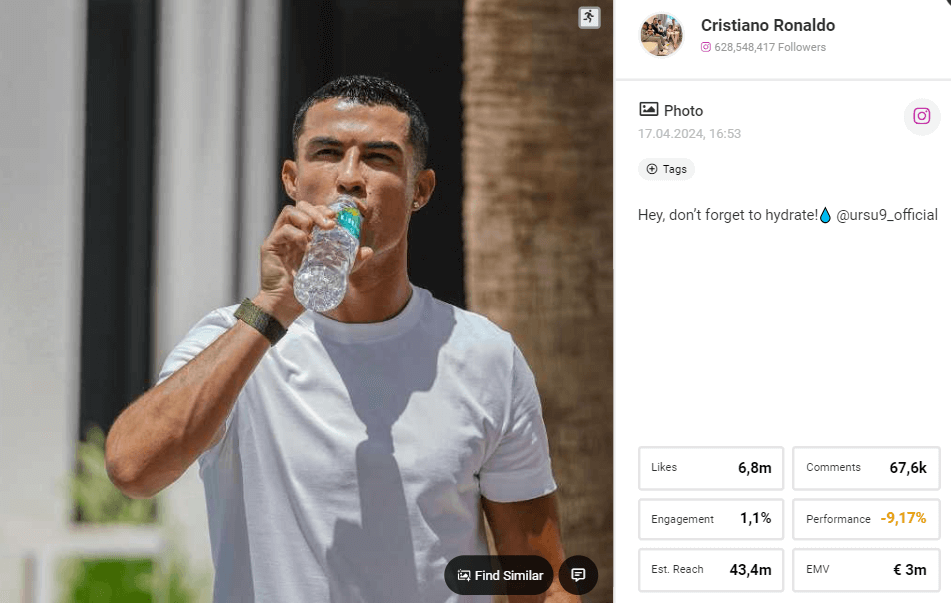
As you can see, what Ronaldo charges is in line with the immense value he drives for the brand. Higher reach and influence benefit the brand more, which is reflected in the price.
But not every influencer is going to charge you €3M to work with them. It depends on the type of influencer.
Types of influencers and how much they charge
One of the main factors that influences the price is reach (the number of followers an influencer has).
Influencers fall into categories based on their reach:
Nano-influencers: 1,000–10,000 followers
Micro-influencers: 10,000–50,000 followers
Mid-tier influencers: 50,000–500,000 followers
Macro-influencers: 500,000–1,000,000 followers
Mega-influencers: 1,000,000+ followers
Instagram mega influencers, like Cristiano Ronaldo, Lionel Messi, Selena Gomez, and Kylie Jenner all make over €2M per sponsored post according to Influencer Marketing Hub.
A micro-influencer or mid-tier influencer will charge significantly less. A nano-influencer might not even charge at all.
A rule of thumb is that an influencer with 1 million Instagram followers will charge approx. $10,000 per post.
This is the same as a CPM of €10, which is fairly standard in the industry. But of course, the exact price varies, depending on the the factors above and the individual influencer. At the end of the day, what they charge is up to them.
Many influencers also charge different prices depending on the platform and content type.
How much do influencers charge on Instagram, TikTok, and YouTube?
Let’s take a look at the breakdown of influencer costs based on the platform.
Cost of an influencer post on Instagram
According to estimates, an Instagram post from an influencer can cost anywhere between $10 and $1M+. Obviously, that’s a huge price range. The main determining factor is the type of influencer.
A nano influencer with 1,000–10,000 followers is likely to charge around $10-$100 per post. A micro influencer (10,000–50,000 followers) typically costs around $100-$500. For a post from a mid-tier influencer (50,000–500,000 followers) you would need to budget $500-$5,000. Macro influencers charge $5,000-10,000 per post.
Mega influencers and celebrities charge significantly more. You would be looking at at least €10,000, but $1M (especially for the likes of Ronaldo) is realistic.
Cost of an influencer post on TikTok
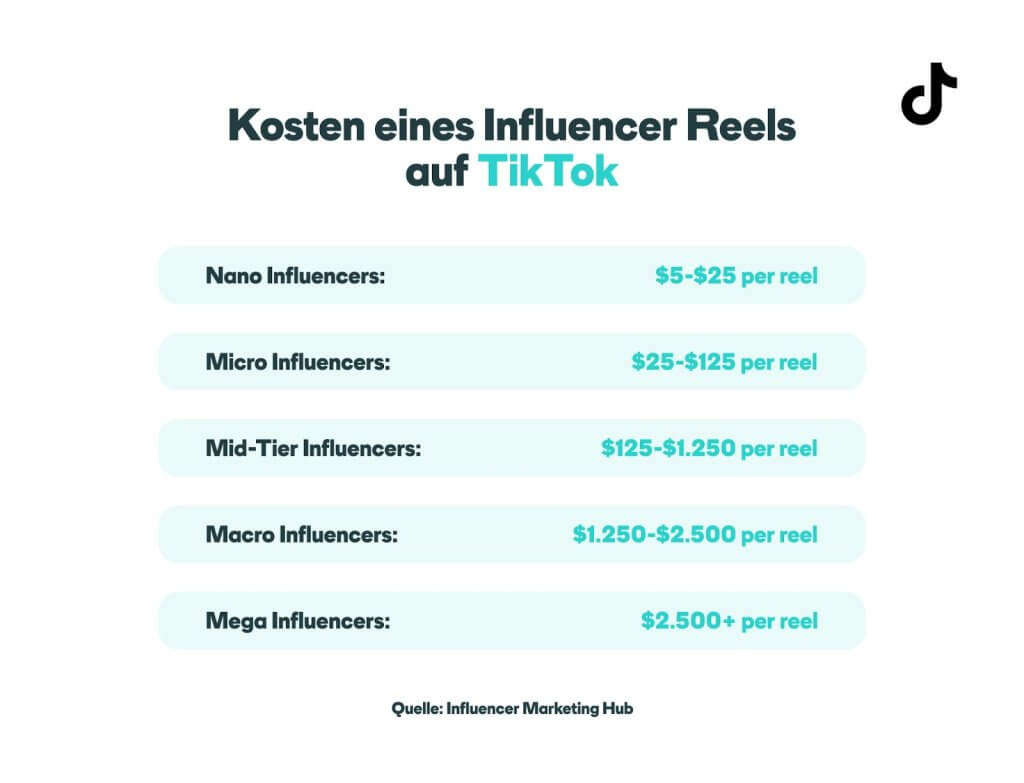
According to estimates, getting an influencer to post for you on TikTok can cost anywhere between $5 (for a nano influencer) and $2,500 (for a mega influencer). Like Instagram, the main determining factor is the type of influencer.
A nano influencer with 1,000–10,000 followers is likely to charge around $5-$25 for a TikTok. A micro influencer (10,000–50,000 followers) is likely to charge you $25-$125. A mid-tier influencer (50,000–500,000 followers) costs $125-$1,250. Macro influencers charge up to $2500, and mega influencers over $2500.
Cost of an influencer post on YouTube
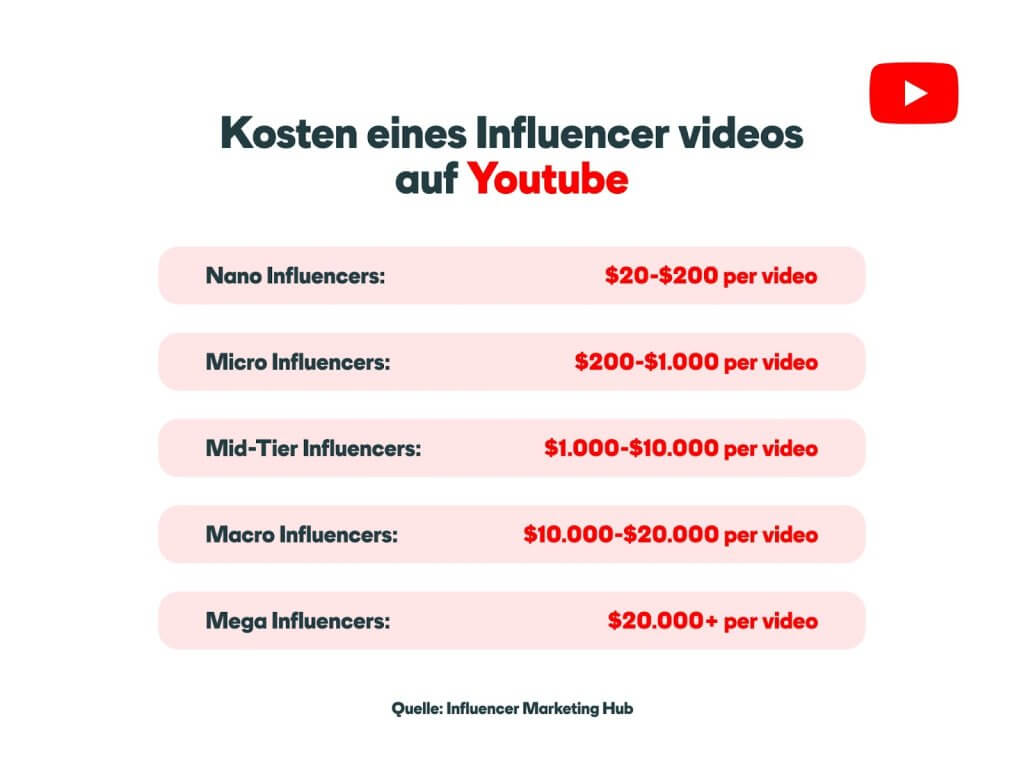
According to estimates, YouTube influencers charge $20-$20,000 (or more) per video depending on how big and influential they are.
A micro influencer is likely to charge $200-$1000 per video, whereas a video from a macro influencer costs in the region of $10,000 or more.
Some YouTube influencers charge based on video views. Approx $50–$100 per 1,000 views is considered normal.
Types of influencer pricing models
Let’s take a look at some more pricing models that are typical in the field of influencer marketing:
- Buyout rights if you want to use the influencer’s content on your own channels)
- Affiliate marketing : commission-based model based on performance
- Influencer seeding : gifting
Buyout rights
Buyouts are rights of use to third parties. Influencers authorize a company to use its images or videos commercially for a fixed fee. Like a post on the company’s own social media accounts. Or an ad on the website.
Buyouts can be purchased either for a limited or unlimited time. Prices vary widely depending on:
- Content creation effort
- Time of use
- Type of use (social media or out of home)
- Geographical scope (worldwide, nationwide, regional)
There are no universal standards, so there is room to negotiate. However, generally, buyouts are based on the cost of the content piece. A standard amount is 25% to 200% on top of the price of the agreed content.
Example:
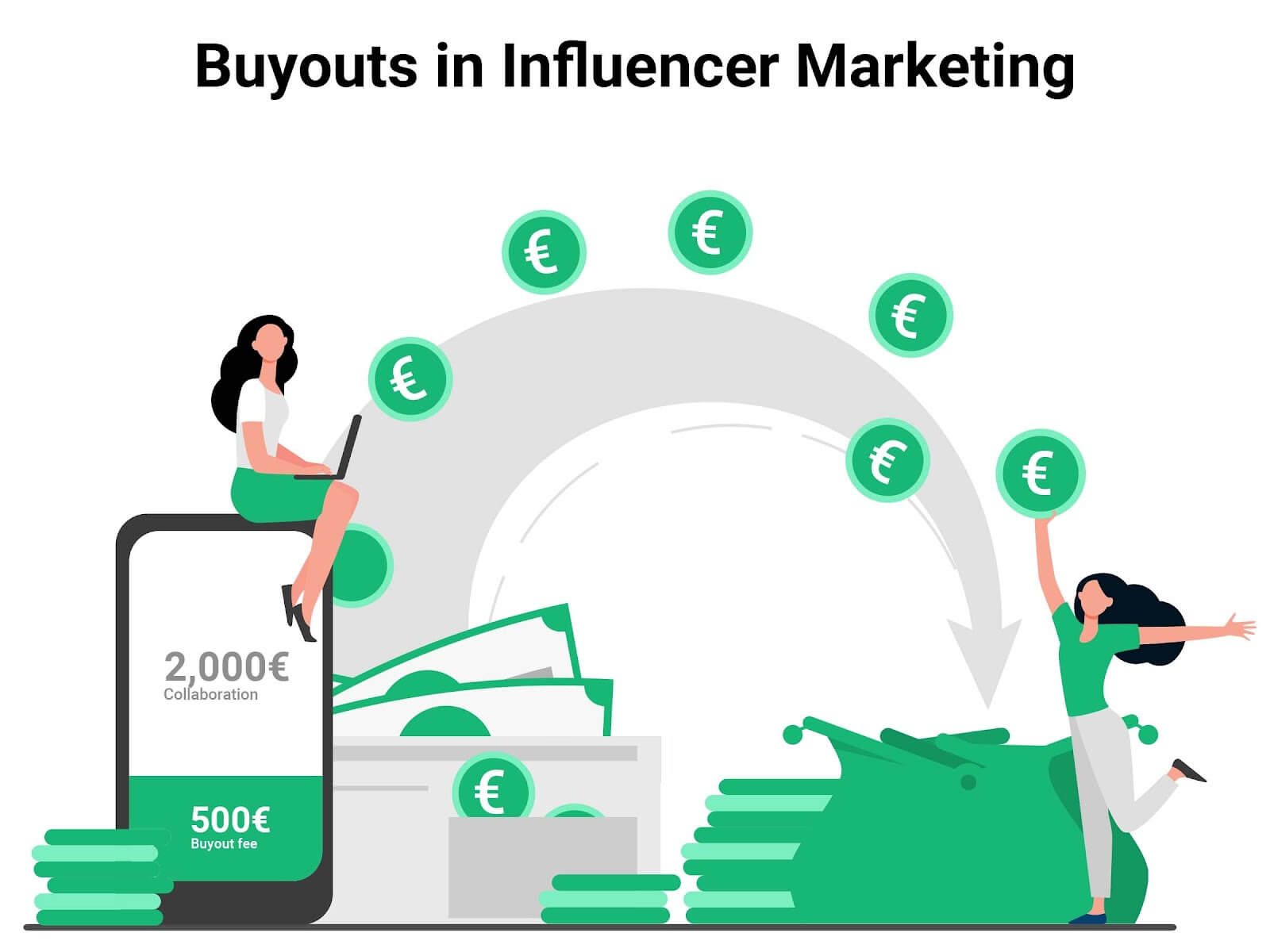
Let’s say an influencer and a brand agreed on €2,000 for an Instagram feed post. The brand wants to share this content on their own Instagram account. Keeping it up for one month is enough. After that, they have to take down the post. An extra €500, which is 25% of the original payment, will be charged for this additional use.
→ 25% of 2,000 euro = 500 euro buyout fee
Tip: If you anticipate wanting to use the influencer’s content on your own channels, it’s best to negotiate the buyout fee upfront and include it in the contract. Waiting to negotiate buyouts until after the collaboration has begun can often lead to higher costs.
Another pricing model in influencer marketing is affiliate marketing.
Affiliate Marketing
In affiliate marketing, the influencer receives a commission based on the sales of a product that they sell through their social media account. Most of the time the commission is between 10-15%.
The influencer can use the product for free on a regular basis, and receives a personalized code to share with their community. Then they receive a commission everytime someone purchases the product.
Through the personalized tracking link, the brand can easily attribute which customers have become aware of the product through the influencer and ultimately made a purchase.
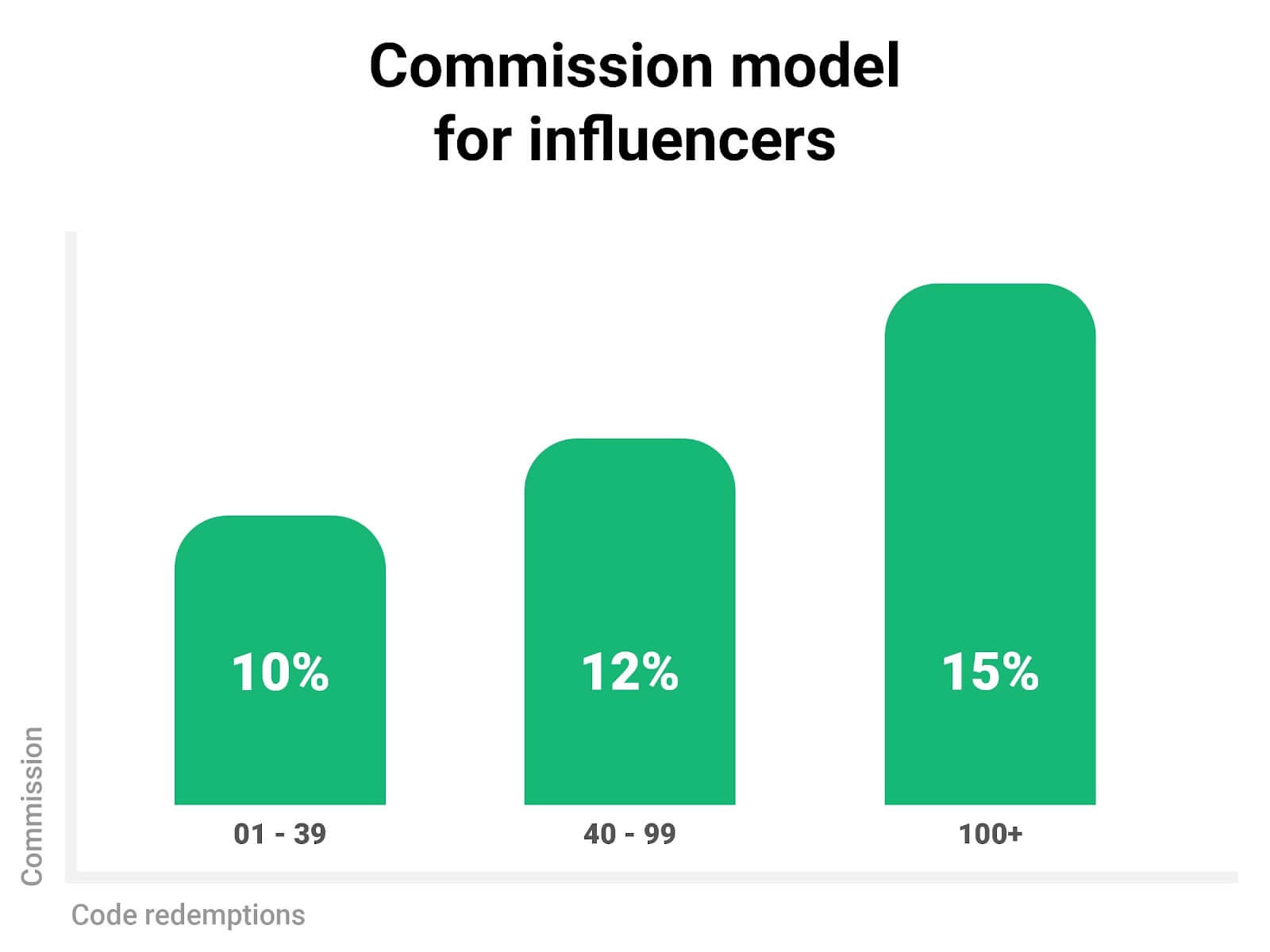
A typical commission model often looks something like this:
- 01-39 code redemptions: 10 %
- 40-99 code redemptions: 12 %
- 100+ code redemptions: 15 %
Affiliates work especially well with smaller, very niche influencers (micro-influencers). But affiliates are also popular with influencers with up to 100,000 followers.
Influencer seeding
Influencer seeding, also known as gifting, involves sending influencers free products. If they like the product, they can mention you on social media. In general, influencers will (rightfully) want paying for their work. But influencer seeding can be a good option for charities and brands on a budget.
How much budget do you need for influencer marketing?
As you can see, the costs of a collab vary depending on the platform and the influencer’s perceived value. When deciding on your budget, you’ll want to think about your total marketing budget, and the projected ROI of your influencer collabs.
As a general rule, most brands are planning to increase their influencer marketing budget in 2024. Research shows that half spend at least $10k per year, and 14.5% spend over $500k.
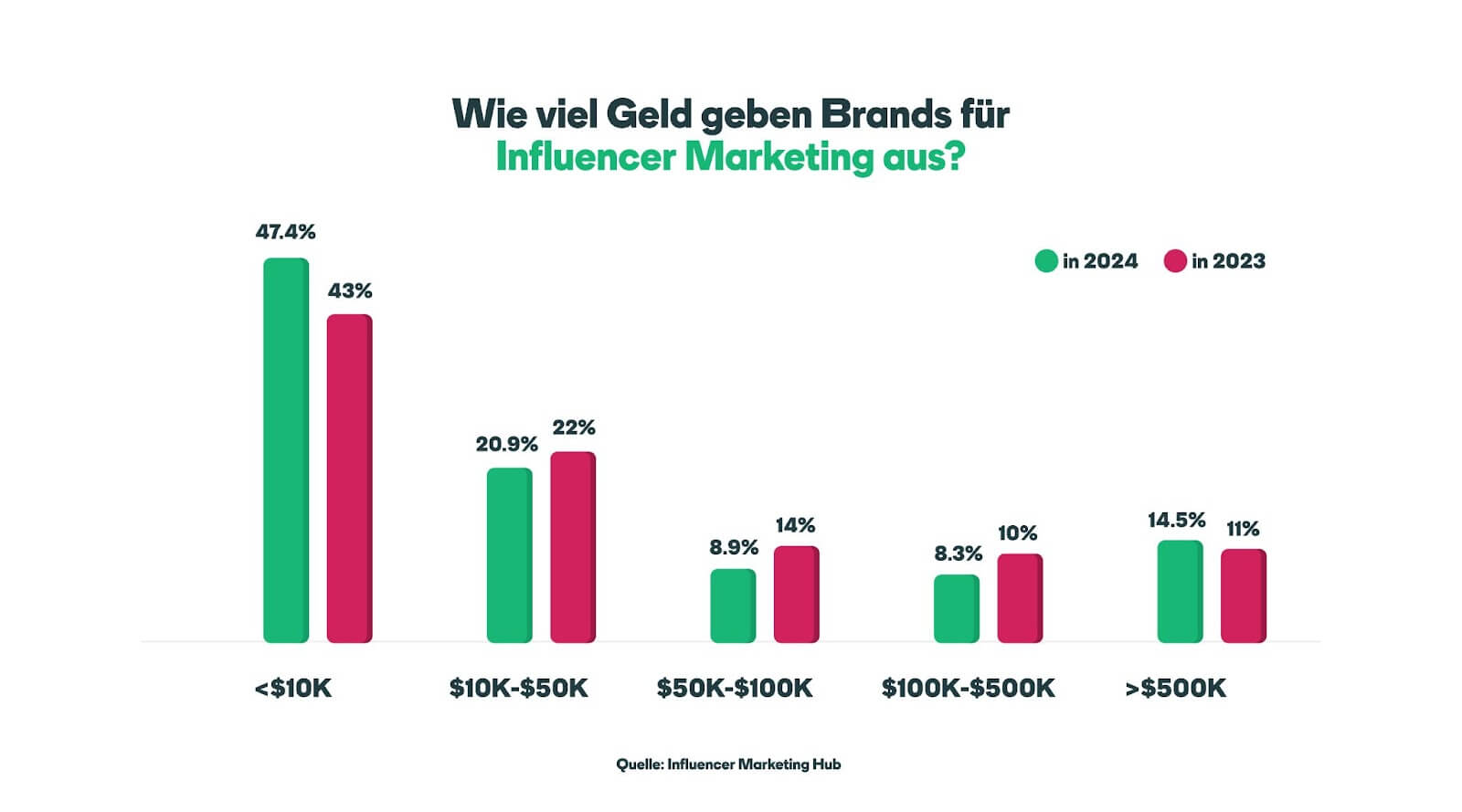
If you’re just getting started with Influencer marketing, you can try running a test campaign between 5,000-10,000 euro/month for a test period of 6 months.
Want to get the most value out of your influencer marketing?
Storyclash is the leading influencer marketing platform. We help top brands like Adidas and Audi, as well as up-and-coming DTC brands like Waterdrop and Bears with Benefits, to find influencers, track campaigns, and maximize their ROI. To see how Storyclash can help you take your influencer marketing to the next level, book a demo today.